Some of America’s largest law firms are refusing to take pro bono and paid legal work from groups that seek to hold the government to account on issues like environmental protection, LGBTQ+ rights and police accountability.
By Molly Redden, Pro Publica
Two weeks into President Donald Trump’s second presidency, and just days after he pardoned hundreds of Capitol rioters, officials Trump had placed in charge of the Justice Department made a sweeping demand. They wanted the names of the thousands of FBI employees who had played a role in investigating the Jan. 6, 2021, attack on the U.S. Capitol.
Fearing mass firings, or worse, retaliation by the people they helped prosecute, a group of agents scrambled to enlist a legal team who could stop the administration in court. Norm Eisen, a prominent ethics lawyer now leading dozens of lawsuits against the Trump administration, agreed within hours to represent the agents pro bono, along with Mark Zaid, a veteran whistleblower attorney. For more firepower, the two approached the giant Chicago-based law firm Winston & Strawn, which has a history of providing free representation to people and organizations that squared off against Trump’s first administration.
But Winston declined to represent the FBI agents, three people with knowledge of the matter said. It was one of several cases Winston turned down in quick succession, they added, that would have pitted the firm against an openly retributive president.
Some of the country’s largest law firms have declined to represent clients challenging the Trump administration, more than a dozen attorneys and nonprofit leaders told ProPublica, while others have sought to avoid any clients that Trump might perceive as his enemies. That includes both clients willing to pay the firms’ steep rates, and those who receive free representation. Big Law firms are also refusing to take on legal work involving environmental protections, LGBTQ+ rights and police accountability or to represent elected Democrats and federal workers purged in Trump’s war on the “deep state.” Advocacy groups say this is beginning to hamper their efforts to challenge the Trump administration.
Their fears intensified after Trump signed a battery of executive orders aimed at punishing top firms over old associations with his adversaries. But as the Winston episode shows, Big Law began to back away from some clients almost the minute he returned to power. The country’s top firms remain deeply wary, even though the president has lost all four initial court challenges to those executive orders.
Recent Posts
Midterms Have Revived Universal Healthcare Debate. These States Are Ahead of Everyone.
Take Action Now States have often served as laboratories to test health policies later implemented nationally.By Markian Hawryluk, KFF Health……
Nobel Peace Prize Turns Toward Peace in 2026
Take Action Now To have finally acknowledged someone whose work in any way addressed the horrors of Zionism is an encouraging sign from the Nobel…
64 Groups to Congress: Start Preparing Tough and Effective Oversight Right Now
Take Action Now The question is not whether the public wants accountability, but whether Congress can conduct the meaningful oversight that exposes…
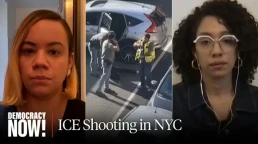
“Abolish ICE”: Protests Erupt in NYC After ICE Agents Shoot Father With 5-Year-Old Son in Car
Take Action Now “Candidates should seek support from the AI industry at their own peril.”By Amy Goodman, Darializa Avila Chevalier, and Carmen De…