
It looks increasingly like the U.S. is more interested in undermining Russia’s power than in saving Ukrainian lives. The U.S. needs to help end the war, not escalate it into a disastrous global confrontation.
By Nathan J. Robinson, Current Affairs
Seth Moulton, a Democratic congressman on the House Armed Services Committee, made a rather shocking assertion on Fox News recently. “We’re not just at war to support the Ukrainians,” Moulton said. “We’re fundamentally at war, although somewhat through a proxy, with Russia, and it’s important that we win.” Former defense secretary Leon Panetta has said something similar, commenting that “we are engaged in … a proxy war with Russia, whether we say so or not.”
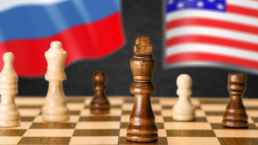
The Biden administration, for its part, has vigorously denied that it is engaged in a “proxy war,” calling this a “Kremlin talking point.” The label “proxy war” is a little vague anyway, although the Washington Post says that one reason the label shouldn’t be applied is that “the core U.S. objective is helping Ukraine achieve a goal it set for itself: to fend off the expanded Russian invasion.” In other words, if we have Ukraine’s interests at heart, we’re not waging a proxy war, while if we are using Ukraine to further our own ends, the label is more apt. But as the Post acknowledges, over time there has been a shift in the way the Biden administration has talked about its goals. High-ranking U.S. officials have suggested that our country’s government does not just want to see Russia withdraw from Ukraine, but wants to “weaken” Russia to the point where it does not possess sufficient military power to invade a country ever again (which would require decimating Russia militarily and economically) and also wants Putin to be removed from power and put in the Hague. The Post acknowledges that the Biden administration’s statements have “suggested U.S. interests had escalated from simply helping Ukraine achieve its own battlefield aims to getting something seen as geopolitically desirable in Washington” and that this certainly “edges” the conflict “in the direction of being a proxy war.”
An important question here is whether the United States, despite its rhetoric, is actually trying to set its own policies on the basis of what Ukraine wants and needs, or on the basis of the outcome the U.S. wants and needs. As Noam Chomsky pointed out in a recent interview with Current Affairs, in the 1980s the United States funded Islamist mujahideen fighters in Afghanistan in part to bleed and weaken the Soviet Union. While there may have been noble rhetoric about aiding the people of Afghanistan, in reality the U.S. cared about its rivalry with the Soviets, not the millions of civilians who died in the Afghan conflict. “We now have the opportunity of giving the USSR its Vietnam War,” Zbigniew Brzeziński says he told Jimmy Carter.” Fueling a violent conflict in a small country in order to weaken a larger adversary is, of course, morally unconscionable.
Recent Posts

The Movement to Abolish ICE Is Gaining Momentum
Take Action Now As activists rally around federal legislation to dismantle ICE, Amnesty International joins the call for abolition.By Mike Ludwig,…

Wanted: An Organized Political Movement to Counter the AI Oligarchs
Take Action Now History teaches us that the American people are capable of building great movements against powerful corporate interests. Let’s hope…
New Polling: 84% Of Voters Support Van Hollen Resolution To Investigate Israel’s Killing of U.S. Citizens
Take Action Now 83% of Democrats, 86% of Independents, and 82% of Republicans back resolutionBy IMEU Policy Project Polling released Monday,…

Why Medicare for All Is Now Possible
Take Action Now The politics of health care are finally catching up with patients and physicians.By Rebecca Delay, The Progressive Across the…