
After a failed regime-change strategy and an increasingly risky military buildup, the Trump administration turns back to nuclear negotiations with Iran—yet structural incompatibilities and Israeli opposition render both diplomacy and war perilous options
By Sotiris Mitralexis, Geo-Trends
The trajectory of the Trump administration’s Iran policy has undergone a profound recalibration since the beginning of 2026, transitioning from expectations of imminent regime collapse to the fraught terrain of nuclear negotiations. The proverbial elephant in the room is the fundamental recognition of previous miscalculation regarding Iran’s internal cohesion and deterrence capabilities.
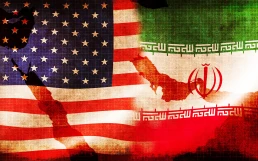
In January, the administration’s initial stratagem hinged upon transforming nascent demonstrations into comprehensive insurgency, which would be consummated through selective airstrikes, precipitating regime change. This hypothesis has been decisively refuted by events on the ground.
The regime change that was not
The genesis of Plan A resided in the convergence of economic grievances and externally orchestrated agitation. When protests erupted in late December 2025, initially catalysed by the precipitous devaluation of the Iranian rial, the Trump administration perceived an opportunity for decisive intervention. As U.S. Treasury Secretary Scott Bessent explicitly stated: “One thing we could do at Treasury, and what we have done, is create a dollar shortage in the country. […] It came to a swift, and I would say grand, culmination in December when one of the largest banks in Iran went under. There was a run on the bank, the central bank had to print money, the Iranian currency went into free fall, inflation exploded, and hence we have seen the Iranian people out on the street.”
The protests, which commenced amongst Tehran’s bazaar merchants before metastasising across Iran, were erroneously interpreted through the lens of the 2022 Mahsa Amini demonstrations. Intelligence assessments, particularly those emanating from Israeli sources, postulated that Iran constituted a house of cards vulnerable to collapse following sustained external pressure and internal insurrection.
Recent Posts
AI Doesn’t Need ‘Superintelligence’ or Evil Intent to Start a Nuclear War
Take Action Now Neither extraordinary machine intelligence nor malicious intent is required for catastrophe to result.By Paul Slovic and Herbert…

30 Months After Uproar Over Jonathan Glazer’s Oscar Speech, What Do His Pro-Israel Denouncers Say Now?
Take Action Now Given all that has happened, I recently contacted some signers of the open letter to ask whether they still fully believe in its…

Midterms Have Revived Universal Healthcare Debate. These States Are Ahead of Everyone.
Take Action Now States have often served as laboratories to test health policies later implemented nationally.By Markian Hawryluk, KFF Health……

Nobel Peace Prize Turns Toward Peace in 2026
Take Action Now To have finally acknowledged someone whose work in any way addressed the horrors of Zionism is an encouraging sign from the Nobel…