Gov. Gavin Newsom embodies that contradiction more than anyone.
By Joshua Scheer, ScheerPost
For nearly a decade, California Democrats have treated single-payer health care like a campaign hymn: sing it loudly during elections, bury it quietly once the donors call. Every few years, voters are told that “Medicare for All” is finally within reach — that California, the self-proclaimed progressive capital of America, is on the verge of breaking free from the insurance industry’s grip. And every few years, the same political machine finds a new excuse to surrender.
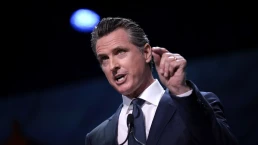
Now, as the 2026 governor’s race heats up, the promise is back again. Candidates are once more invoking universal health care as a moral necessity, even as millions of Californians drown in premiums, deductibles, medical debt and shrinking access to care. But beneath the rhetoric lies an uncomfortable truth: the Democratic establishment has spent years perfecting the art of sounding revolutionary while governing as caretakers of the private insurance system.
The latest reporting from CalMatters captures the political theater perfectly. Candidates speak reverently about single-payer, but few offer concrete plans, timelines or mechanisms to achieve it.
That absence is not accidental. It reflects the central contradiction of modern California liberalism: Democrats want the moral prestige of supporting universal health care without confronting the industries that profit from denying it.
Gov. Gavin Newsom embodies that contradiction more than anyone.
Back in 2017, Newsom declared that Californians had his “firm and absolute commitment” to deliver single-payer health care. It helped secure the endorsement of the powerful California Nurses Association and fueled the image of Newsom as a progressive future president. But once in office, the urgency vanished. Studies were commissioned. Committees were formed. Federal waivers were discussed. Then the entire project slowly disappeared into Sacramento’s bureaucratic fog.
Dan Walters sharpened the indictment in CalMatters, arguing that Newsom effectively “slow-rolled” his 2018 single-payer pledge by creating commissions, backing SB 770 and stretching the issue into the next governor’s term. Walters notes that the California Nurses Association called Newsom’s approval of SB 770 “a complete betrayal,” while legislative leaders recently shelved Ash Kalra’s CalCare bill without even giving it a hearing — another reminder that in Sacramento, single-payer is forever studied, priced out, postponed and buried before voters ever get a real fight.
While campaigning for governor in 2018, Gavin Newsom won the enthusiastic backing of the California Nurses Association by attacking what he framed as the political cowardice surrounding single-payer healthcare. At a lively campaign stop in San Diego, Newsom famously declared: “My opponents, they call it snake oil. I call it single-payer… I’m tired of politicians saying they support single-payer but that it’s too soon, too expensive or someone else’s problem.”
But once in office, the fire faded into the familiar language of political retreat. The sweeping promise of single-payer slowly became “aspirational,” buried beneath talk of federal waivers, logistical hurdles and the classic refrain voters know all too well: “These things take time.” The same excuses Newsom once mocked on the campaign trail had suddenly become the foundation of his own administration’s approach.
The result? California expanded access to insurance without guaranteeing actual health care.
That distinction matters enormously.
What makes the retreat even more glaring is that California is simultaneously debating proposals that could generate billions to stabilize and expand healthcare funding — including a proposed billionaire wealth tax designed specifically to offset looming healthcare shortfalls. The measure, backed by tax scholars and labor advocates, would place a modest tax on the state’s wealthiest oligarchs, many of whom currently pay lower effective tax rates than ordinary workers while amassing fortunes through untaxed financial gains. Yet Newsom and much of the political establishment have largely resisted the idea, warning instead about protecting the “business climate” and preserving the existing economic order.
That says everything about the deeper priorities at work. Rather than confront concentrated wealth or challenge the corporate structure of American healthcare, Sacramento continues defending a system where access to care is tied to sprawling for-profit and nominally nonprofit healthcare corporations whose first obligation is not to patients, but to balance sheets, executive salaries and institutional expansion. The result is a healthcare model where human need is permanently subordinated to financial calculations — and where politicians endlessly promise reform while protecting the industries that profit from the crisis itself.
Gavin Newsom was asked directly about the future of single-payer healthcare, and while he called it “inevitable,” his response ultimately underscored the limits he believes California faces without federal approval. Newsom argued that California “cannot do it alone,” pointing repeatedly to the need for federal waivers and partnership from Washington — something he suggested is impossible under the current Trump administration.
The exchange captures the larger contradiction at the center of the healthcare debate in California. While current candidates continue to campaign on the hopes and promises of universal healthcare, Newsom effectively pours cold water on those ambitions by insisting that no proposal can move forward without cooperation from the federal government. In doing so, he frames single-payer not as a question of political will inside California, but as one constrained by federal power, waivers, and an administration hostile to the very idea.
“I think single-payer is inevitable in this country. Period. Full stop. The health care system is simply devouring the public sector and devouring private-sector budgets. There’s no alternative from my perspective. I call total BS on all the fake tinkering that the Republican Party claims, or some new idea and proposal that’s coming out next week. Donald Trump, for 10 years, has been talking about that since he came down the escalator — nothing in this space.
I appreciate and applaud what Nancy Pelosi was able to achieve, and what President Obama was able to achieve, what President Biden was able to achieve in expanding support, and what we’re doing here in Covered California that I think is next level — what we did to advance even further and beyond.
But I do think the system itself — when you talk about structural problems — it’s an inevitability. So the question is: can a state do it? California cannot do it alone. It’s going to require a level of partnership and largesse from the federal government that is not in evidence. That is not an indictment of the vision, the proposal, or the direction that some of the candidates are promoting. I intend to share it.
As I said, it cannot happen without the largesse of the American people, Congress, and the president, by definition.”
Gavin Newsom
Politicians frequently boast that California has achieved near-universal “coverage.” But coverage is not care. An insurance card means little when patients cannot afford deductibles, co-pays, out-of-network bills or skyrocketing monthly premiums. The state’s system remains dominated by private insurers, hospital conglomerates and pharmaceutical corporations whose profits depend on keeping health care fragmented and expensive.
As Dr. Paul Song bluntly argued in a recent interview highlighted by Truthout, Californians are already paying enough money to fund a universal system — they’re just paying it into one of the most wasteful, parasitic administrative structures ever created. Instead of public health infrastructure, billions disappear into executive salaries, shareholder returns, lobbying operations and insurance bureaucracy.
The political establishment loves to cite the enormous projected price tag for single-payer — figures ranging from roughly $400 billion to over $700 billion annually. But those numbers are routinely presented without context, as if Californians are not already spending comparable amounts through premiums, taxes, employer contributions and out-of-pocket costs. The debate is framed in a way that protects corporate medicine from scrutiny while portraying universal care as an impossible fantasy.
And yet, the fantasy already exists across much of the industrialized world.
The United States remains the richest country on Earth while simultaneously maintaining one of the most dysfunctional and predatory health systems in the developed world. Americans routinely ration insulin, delay surgeries, avoid ambulances out of fear of bankruptcy and navigate incomprehensible insurance networks designed less around care than around profit extraction.
California Democrats know this. Which makes their evasiveness even more cynical.
The political class increasingly relies on symbolic progressivism — emotionally resonant language detached from material confrontation. “Health care is a human right” becomes a slogan rather than a governing principle. Candidates invoke Medicare for All while accepting support from hospital associations, pharmaceutical interests and medical lobbying groups that exist precisely to stop it.
Even Newsom’s gradual pivot tells the story. What began as support for “single-payer” quietly transformed into support for “universal access to coverage,” a linguistic sleight-of-hand that preserved the insurance industry while allowing Democrats to continue presenting themselves as reformers.
That shift was not merely semantic. It was ideological surrender.
The deeper problem is structural. Modern Democratic politics often functions as a pressure-release valve for public anger rather than a vehicle for systemic transformation. Progressive demands are absorbed into campaign branding, then neutralized once elections end. The rhetoric energizes voters; the governing protects capital.
Health care is perhaps the clearest example.
Every crisis exposes the system’s brutality. The pandemic revealed hospitals run on austerity. Medical debt continues to devastate working families. Rural clinics close. Insurance giants report enormous profits. Yet meaningful structural reform remains perpetually postponed — too expensive, too complicated, too politically risky.
Always later.
Meanwhile, ordinary people continue paying with their bodies.
The timing of Newsom’s latest comments made the contradiction even harder to ignore. Just as California Democrats were once again debating the future of single-payer healthcare during the governor’s race, Newsom insisted at a May 2026 press briefing that “single-payer is inevitable in this country” and that the current healthcare system is “devouring the public sector and devouring the private sector budgets.” Yet in the very same breath, he argued California “cannot do it alone,” warning that federal cooperation and waivers made the project politically unrealistic.
That tension has come to define the entire Democratic approach to healthcare in California: publicly acknowledging that the existing system is unsustainable while continuing to defend the corporate structures that created the crisis in the first place.
What makes this even more striking is that these comments arrived at the same moment California was debating proposals that could generate billions to stabilize healthcare funding without gutting services. One of the most significant was a proposed billionaire wealth tax designed specifically to offset looming healthcare shortfalls and protect programs facing cuts. Supporters argued the measure would force a tiny class of ultra-wealthy Californians — many of whom pay lower effective tax rates than ordinary workers — to contribute toward preserving healthcare access for millions.
But rather than aggressively championing such measures, Newsom and much of the political establishment have continued defending the status quo: a fragmented healthcare system dominated by massive for-profit and nominally nonprofit healthcare corporations whose primary responsibility is protecting institutional growth, market share and executive compensation. The result is a political culture where leaders openly admit the system is broken, even “inevitable” to replace, while simultaneously refusing to confront the wealth and corporate power preventing that transformation from ever taking place.
The tragedy is that Californians are repeatedly told to lower their expectations in one of the wealthiest regions in human history. A state home to Silicon Valley billionaires, entertainment empires and staggering concentrations of capital somehow claims it cannot guarantee basic medical care to its residents.
But there always seems to be money for tax incentives, corporate subsidies, policing expansions, stadium projects and militarized infrastructure.
What California’s political establishment fears is not economic impossibility. It fears political confrontation with entrenched wealth.
Recent Posts
Blanche says Trump isn’t trying to meddle with Alaska election results by suing over Senate race
Take Action Now A day after the lawsuit was filed on Thursday, Peltola called it “just flagrant, flagrant corruption in my opinion” and a diversion…

The Courage to Keep the Oath
Take Action Now Why We Must Stand with Major Jason WatsonBy Jeffrey Sterling For almost two months, an Air Force officer has been sitting alone in…

‘Act of Collective Punishment’: Netanyahu Condemned Over ‘Full Lockdown’ of Occupied West Bank
Take Action Now The reaction to a shooting incident in Hebron, said one Palestinian critic, “represents an alarming escalation in Israel’s policies…
‘Stop The War on Iran’: Brooklyn Peace Activists Urge Jeffries to Help End Conflict
Take Action Now Democrats have a golden opportunity to capitalize on this issue, win big in November, and take real action on AI data centers to…