Capitalism may be in its end stages, but its successor may be more repressive. Meet technofeudalism.
by Yanis Varoufakis, Current Affairs
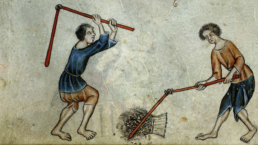
What would it take for capitalism to die? In your youth you had a definitive answer: capitalism will die, like Dr. Frankenstein, indirectly of its own hand, a deserving victim of its greatest creation: the proletariat. Capitalism, you were convinced, was creating two great camps destined to clash: capitalists, who did not physically work with the revolutionary technologies they owned; and the proletarians who spent their days and nights working in, on, under, or with these technological wonders, from merchant ships and railways to tractors, conveyor belts, and industrial robots. The revolutionary technologies were no threat to capitalism. But revolutionary workers who knew how to work these incredible machines were.
The more capital dominated the global economic and political sphere the closer the two camps got to facing off one another in a critical battle. At its conclusion, and for the first time on a planetary scale, good would vanquish evil. The bitter bifurcation of humanity, between owners and non-owners, would thus be healed. Values would no longer be reducible to prices. And humankind would, at last, be reconciled with itself, turning technology from its master to its servant.
In practical terms, your vision meant the birth of a proper, technologically advanced, socialist democracy. Collectively owned capital and land would be pressed into producing the things society needs. Managers would be answerable to the employees that elected them, to their customers, to society as a whole. Profit would wither as a driving force because the distinction between profit and wages would no longer make sense: every employee would be an equal shareholder, their pay coming out of their enterprise’s net revenues. The simultaneous death of the market for shares and of the labor market would turn banking into a staid, utility-like sector. Markets and concentrated wealth would, consequently, lose their brutish power over communities, allowing us collectively to decide how to provide health, education, and protection of the environment.
Recent Posts
88 Corporations That Paid No US Federal Income Tax in 2025 Spent $852 Million on Recent Lobbying, Elections
Take Action Now “The result,” said the author of a new Public Citizen analysis, “is a self-reinforcing loop where corporate cash buys policy, and…

Gaza is Not an Aberration – Israel Planned This Genocide Decades Ago
Take Action Now In October 2023, Israel found an excuse to breathe new life into an old story of slaughter and expulsion. The chief differences this…

Top Pentagon Official Admits Boat Strike May Have Killed Victims of Human Trafficking
Take Action Now If this boat was running drugs, why was it loaded with so many people?By Nick Turse, The Intercept Nine months into the Trump…
The New Documentary “An Ordinary Insanity”
Take Action Now Only when such sanity becomes ordinary will we have a chance of surviving the nuclear era.By Robert Ellsberg This film presents a…