Nayib Bukele is using populism to bury democracy in El Salvador. He’s not the only leader to do so.
By Ameer Al-Auqaili, Foreign Policy in Focus
Democracy in El Salvador crossed a critical threshold at the end of July. The country’s Legislative Assembly, dominated by President Nayib Bukele’s party, passed sweeping constitutional changes that day: presidential term limits were abolished, presidential terms extended from five to six years, and runoff elections were eliminated.
This represented the final phase of power consolidation spanning years. Bukele’s Assembly majority had dismissed all five Constitutional Chamber Supreme Court judges and the attorney general on May 1, 2021, replacing them with loyalists. The restructured court then authorized his bid for a second consecutive term that September, a move the constitution had previously prohibited.
Bukele frames these changes as efforts to “modernize” governance. Critics describe it as autocratic legalism: exploiting legal processes to dismantle democratic safeguards.
What makes this transformation particularly remarkable is Bukele’s sustained popularity. His approval rating reached approximately 85 percent in a June 2025 CID-Gallup poll, driven largely by steep reductions in gang violence. Against this backdrop, constitutional amendments that centralize authority are presented not as power grabs, but as fulfilling “what the people want.”
Bukele’s transformation offers a real-time example of how democratic institutions can be dismantled from within, swiftly, through legal channels, and with broad popular backing. The lesson for Americans is stark: undermining checks and balances requires neither coups nor violent uprisings. What it demands is a leader with sufficient popularity, control over key institutions, and the determination to reshape governing rules.

The process unfolds gradually, making it harder for citizens to recognize the danger until significant damage is done. Each individual step can appear reasonable or even necessary when viewed in isolation. But collectively, these incremental changes can fundamentally alter the balance of power in ways that prove difficult to reverse. Traditional democratic safeguards, such as elections, courts, and legislatures, become tools of consolidation when captured by determined leaders. The very institutions designed to prevent authoritarian takeover can be turned against democracy itself. Unlike external threats or obvious coups that trigger immediate resistance, this internal erosion often proceeds with public approval until the transformation reaches a point of no return.
The international precedent is troubling: once these changes take hold, reversing them requires far more political will and civic mobilization than preventing them in the first place. Most concerning is how this approach exploits democracy’s greatest strength, its responsiveness to popular will, and transforms it into a vulnerability that can be systematically exploited. The result is a system that maintains democratic vocabulary while operating under increasingly authoritarian principles.
El Salvador’s developments represent more than an isolated case; they reflect a worldwide trend. Leaders across various nations have learned to erode democratic systems without staging outright overthrows. Their approach remains consistent: gradually altering governing rules, weakening autonomous institutions, and skewing the political landscape in their direction, while preserving electoral processes to maintain democratic appearances.
Recent Posts
Decoding Pro-Israel Buzzwords in a Time of Genocide
Take Action Now Support for Israel has declined steeply among Americans, but its defenders continue to maintain a siege of buzzwords against…
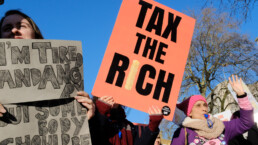
Tax the Rich and Slash the Military Budget
Take Action Now The Left is often asked how it proposes to pay for programs like universal childcare, Medicare or All, and a green jobs program.…

Israeli Mob Beats Washington Post Journalist, Burns Olive Trees In West Bank
Take Action Now “They just kept kicking me and kicking me,” photojournalist Heidi Levine recalled from a hospital bed after the attack.By Ryan…
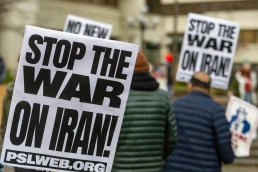
Take Action October 20 to End the Illegal U.S.-Israeli War on Iran, #PeaceWithIranNOW
Take Action Now The war is not just illegal, but massively unpopular with the U.S. public, and Trump and his Republican enablers may take a deserved…