
As Trump escalates threats, oil chokepoints tighten, and talk of “total surrender” creeps toward the unthinkable, Trita Parsi warns that the US-Israeli war on Iran is entering its most dangerous phase yet.
By Scheerpost Staff
There are moments when the machinery of war begins to outrun the people operating it—when threats replace strategy, escalation replaces thinking, and the logic of destruction takes on a life of its own.
According to foreign policy analyst Trita Parsi, that moment may already be here.
Across two stark interviews—one with Chris Hedges and another on Democracy Now!—Parsi delivers a consistent, deeply alarming message: the US-Israeli war on Iran is no longer being driven by coherent strategy, but by desperation, miscalculation, and a refusal to accept limits. What began as a show of force is rapidly evolving into a confrontation with global consequences—and potentially catastrophic endpoints.
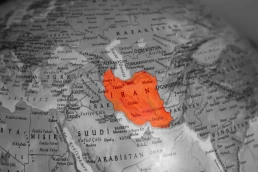
A War Built on Illusion
At the core of the crisis is a fundamental misread.
Washington believed Iran would fold.
Sanctions would cripple the economy. Military pressure would fracture the state. A few decisive blows would force Tehran to the table on US terms—or trigger collapse altogether.
None of that happened.
Instead, Iran absorbed the pressure and adapted. It tightened its grip on the Strait of Hormuz, one of the world’s most critical energy chokepoints, and leveraged that position into real power over global oil flows. The result is a war that has not weakened Iran into submission—but strengthened its bargaining position while destabilizing the global economy.
This is the first truth of the conflict: the United States is not escalating from strength. It is escalating from failure.
Desperation in the White House
Parsi describes a pattern that should unsettle anyone paying attention.
Deadlines. Threats. Ultimatums.
And behind them, a growing recognition that none of it is working.
Trump’s increasingly volatile rhetoric—including threats to bomb Iran’s power plants, bridges, and energy infrastructure—reflects a leader who lacks what Parsi calls “escalation dominance.” He cannot dictate terms. He cannot force surrender. And he cannot easily exit the war without admitting defeat.
So the threats intensify.
But escalation carries its own logic—and its own consequences.
The Energy War That Could Break the World
The most immediate danger is not symbolic. It is structural.
If the United States and Israel follow through on threats to target Iran’s core infrastructure—especially energy systems—Iran will retaliate in kind. Gulf energy facilities, shipping routes, and regional power grids would become targets.
This is where the war shifts from dangerous to catastrophic.
Right now, the global oil crisis is driven largely by a bottleneck—restricted flows through the Persian Gulf. That can be reversed. But if production infrastructure is destroyed, the damage could last years. Oil would not simply be delayed—it would disappear from the market.
The result?
A prolonged global economic shock. Potential depression. Political instability far beyond the Middle East.
This is not a hypothetical. It is the logical next step of escalation.
The Lie of Democracy Through Destruction
As always, the war is framed in the language of liberation.
But Parsi dismantles that narrative with devastating clarity.
Sanctions did not weaken authoritarianism in Iran—they strengthened it. During the brief period when sanctions were lifted, Iran’s economy grew and its middle class expanded, creating the conditions for political reform. When sanctions were reimposed, that progress collapsed. Millions were pushed into poverty. Repression intensified.
The pattern is unmistakable.
Economic warfare does not produce democracy. It produces desperation.
And desperation radicalizes both governments and populations.
Inside Iran, this has meant a shift toward a more hawkish, more repressive state—precisely the opposite of what interventionists claim to want.
From Protest to Proxy Conflict
The war is not confined to borders.
Parsi points to revelations that the United States has provided weapons to armed groups operating within Iran—blurring the line between internal dissent and external intervention. While protests were largely peaceful, the presence of armed elements introduced a new level of violence, one the Iranian government responded to with mass repression.
The result is a familiar cycle:
Destabilize. Escalate. Repress. Justify further intervention.
It is a playbook seen before—from Iraq to Syria—and now unfolding again.
The Israelization of American War
One of the most striking themes across both interviews is what Parsi describes as the “Israelization” of US strategy.
This is a shift away from decisive victory toward perpetual conflict—what Israeli doctrine calls “mowing the grass.” Infrastructure is targeted. Civilian systems are degraded. The goal is not resolution, but continuous weakening of the adversary.
It is a doctrine of endless war.
And it is being normalized.
Diplomacy as Theater
Even the language of peace has been hollowed out.
US proposals for “phased” ceasefires are viewed by Iran not as genuine attempts to end the war, but as tactical pauses—opportunities for Washington and its allies to regroup before resuming hostilities. Given the track record in Gaza and Lebanon, this skepticism is not unfounded.
From Tehran’s perspective, agreeing to such terms would mean surrendering leverage in exchange for promises that history suggests will not be kept.
So the war continues.
The Nuclear Shadow
And then there is the unthinkable.
Parsi notes that discussions of nuclear escalation are no longer confined to the margins. In Washington policy circles, the possibility is being openly contemplated—not because it is rational, but because conventional options are failing.
This is how catastrophes happen.
Not through careful planning, but through desperation.
Through leaders who cannot achieve victory, cannot accept compromise, and cannot admit failure.
A System That Cannot Stop
What emerges from these interviews is not just a warning about Iran, but about the system driving the war.
A system that escalates when it should retreat.
A system that destroys economies in the name of stability.
A system that repeats the same mistakes—and calls them strategy.
The United States has been here before.
Iraq. Afghanistan. Libya.
Each time, the same promises. Each time, the same outcome.
But this time, the stakes are higher.
Because this time, the war is brushing up against the foundations of the global economy—and the edge of something far more final.
The Choice Ahead
There is still a way out.
Diplomacy. De-escalation. A recognition of limits.
But those paths require something the current system struggles to provide: humility.
Without it, the logic of escalation will continue to unfold—step by step, strike by strike—until the consequences can no longer be contained.
And by then, it may be too late.
Recent Posts

Why Ro Khanna and AOC Should Run for President in 2028
Take Action Now This week, RootsAction teamed up with Progressive Democrats of America to announce that we will jointly launch, just after the…
‘Proven Leaders and Voices of Clarity’: Progressives Urge Ocasio-Cortez and Khanna to Enter 2028 Presidential Race
Take Action Now “AOC and Khanna… have shown a willingness to blaze unusual and much-needed trails on Capitol Hill beyond the constraints of the…

‘Hit the Brakes’: Anthropic CEO’s Push to ‘Pace’ AI Development Called Latest Sign Congress Must Act
Take Action Now “When the future of humanity is at stake we need a PAUSE on advanced AI development and a ban on artificial superintelligence,” said…
Accountability for the Gaza Genocide Can’t Focus on Netanyahu Alone
Take Action Now Getting rid of one bad leader won’t bring justice.By Jeet Heer, The Nation On Thursday, former US Secretary of State Hillary…