
President Trump’s order to block sanctioned oil tankers near Venezuela escalates military tensions, raises constitutional and international law concerns, and jolts global oil markets.
By Jordan Atwood, Nation of Change
U.S. President Donald Trump late Tuesday announced what he called a “total and complete blockade” of sanctioned oil tankers entering and leaving Venezuela, a dramatic escalation that lawmakers, legal experts, and anti war advocates described as an act of war carried out without congressional authorization.
In a series of posts on his social media platform, Trump said the blockade would remain in place until Venezuela returns to the United States “all of the Oil, Land, and other Assets that they previously stole from us.” He asserted that Venezuela has been designated a “FOREIGN TERRORIST ORGANIZATION” and framed the action as a response to what he described as theft, terrorism, drug smuggling, and human trafficking.
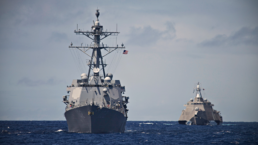
“Therefore, today, I am ordering A TOTAL AND COMPLETE BLOCKADE OF ALL SANCTIONED OIL TANKERS going into, and out of, Venezuela,” Trump wrote.
The declaration followed a rapid buildup of U.S. military assets in the region. According to the reporting provided, the Trump administration has moved thousands of troops and nearly a dozen warships, including an aircraft carrier, into the Caribbean. Trump underscored that posture in his own language, writing that Venezuela is “completely surrounded by the largest Armada ever assembled in the History of South America,” adding, “It will only get bigger, and the shock to them will be like nothing they have ever seen before.”
Venezuela’s government immediately rejected the announcement. Officials denounced Trump’s comments as a “grotesque threat” and accused the United States of seeking control over the country’s natural resources. President Nicolás Maduro said the U.S. military buildup was aimed at overthrowing his government and seizing Venezuela’s oil wealth.
Recent Posts
“Abolish ICE”: Protests Erupt in NYC After ICE Agents Shoot Father With 5-Year-Old Son in Car
Take Action Now “Candidates should seek support from the AI industry at their own peril.”By Amy Goodman, Darializa Avila Chevalier, and Carmen De…

Voters in Key States See AI Campaign Cash as More Politically Toxic Than AIPAC: Poll
Take Action Now “Candidates should seek support from the AI industry at their own peril.”By Jake Johnson, Common Dreams Polling data released…
Everything You’ve Been Told About Lethal Injection Is a Lie
Take Action Now Death by drugs is brutal—and designed for political optics. Christa Pike’s failed execution pulled back the curtain.By Arianna…
British Support For Israel Is Shattering
Take Action Now There is not a single member of the Foreign and Commonwealth Office who believes that Israel, under any leadership, would allow a…