Since his first inauguration, Trump has been throwing charges at protesters and seeing what sticks. He always failed — until now.
By Natasha Lennard, The Intercept
It started on President Donald Trump’s very first day in office in 2017. Over 200 Inauguration Day protesters were mass arrested and charged with hefty riot and conspiracy felonies for simply being present and wearing black at a rowdy demonstration.
Since then, the government has sought and failed to convict left-wing activists on thin, unconstitutional claims of collective guilt.
Just as the J20 prosecutions, as the inauguration cases were known, fell apart, so too did cases accusing dozens of participants in the Atlanta-based Stop Cop City movement of domestic terrorism, racketeering, and conspiracy.
It became a pattern of sorts. Prosecutors on both the federal and state level throwing extreme and overreaching charges at leftists, based on infirm theories of collective liability, aiming to paint antifascist, anti-racist movements as criminal terrorist networks. The evidence marshaled in these cases was consistently no more than typical First Amendment-protected activity, like making protest signs, raising bail funds, or being present at a demonstration. The cases drained movement energies and resources.
Again and again, though, they failed.
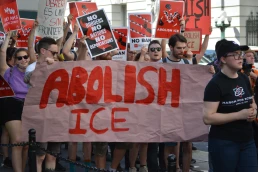
This was the pattern repeated in the malign, overreaching cases against protesters in Fort Worth, Texas. The anti-ICE activists had mounted a demonstration at a U.S. Immigrations and Customs Enforcement jail in nearby Alvarado.
There were consistencies with other anti-protest cases. There had been some illegal activity outside the Prairieland Detention Facility last July, and a police officer was shot. The government latched onto these circumstances to build its strategy of criminalizing dissent through guilt by association.
Recent Posts
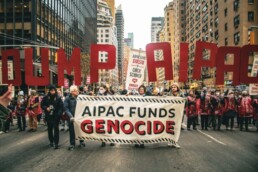
While Distancing From AIPAC, Most 2028 Democratic Hopefuls Are Still Embracing Israel
Take Action Now In sharp contrast to confronting the immorality of arming Israel’s genocidal policies, simply promising not to take AIPAC money is…
The Next Coup Attempt … And How to Stop It
Take Action Now It is up to us to put two and two together: Trump will seek to exploit the war (or the next one) to alter the elections. We bear…
‘A Moral Obscenity’: Trump Budget Pairs Record Military Boost With Billions in Cuts to Social Programs
Take Action Now “To pay for his endless wars, he wants the biggest increase to military spending in 70 years,” said Rep. Greg Casar. “Hell no.”By…

Meet Leqaa Kordia: Palestinian Protester Freed After a Year in ”ICE Dungeon”
Take Action Now While in custody, Kordia experienced destitute conditions at the Prairieland Detention Center, including overcrowding, inedible food,…