
More Afghan people may die from sanctions than from 20 years of war.
By Lee Fang, The Intercept
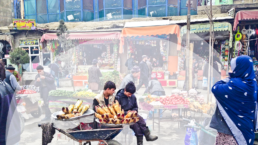
When the U.S. pulled out of Afghanistan in August, ceding to the Taliban, the country’s economy began a severe contraction — what the Financial Times calls “one of the worst economic meltdowns in history.” The sprawling crisis has left nearly 23 million people in extreme hunger, and at least 1 million children under the age of 5 are now facing the immediate threat of starvation, according to the United Nations.
As commerce ground to a halt, food and fuel prices skyrocketed, in large part due to economic sanctions placed on the Taliban by the U.S. As many as 300,000 Afghans have fled to neighboring Pakistan, and many more refugees may soon leave the country. There are even reports that some Afghans have resorted to selling their children in order to feed their families.
The Biden administration defends the sanctions by pointing to a series of exemptions designed to allow humanitarian aid. The Treasury Department has touted its role as a leading humanitarian donor to the people of Afghanistan and its work to ensure that funds flow “through legitimate and transparent channels” via official sanction exemption licenses.
But those humanitarian exemptions, overseen by the Treasury’s Office of Foreign Assets Control, are nowhere near enough, according to experts who spoke to The Intercept. The OFAC licenses, including new licenses released December 22, have not curbed the global chilling effect of the sanctions and are ineffective in preventing a spiraling disaster that could kill more Afghan people than nearly 20 years of U.S.-backed war and occupation.
Recent Posts

Trump Says He’s Banning CNN, MS NOW, and Politico From the White House
Take Action Now “These outrageous attacks only demonstrate how scared he is of an informed public,” said one press freedom advocate.By Stephen…
Bases Without Names: How Governments Rebrand the U.S. Military Presence
Take Action Now Across Asia, Europe and the Middle East, governments use an expanding vocabulary to describe sites that accommodate U.S. troops,…

Getting Into ‘Good Trouble’ Over Arc de Trump
Take Action Now A retired Army colonel flew in from Hawaii to make sure Trump’s arch doesn’t go up quietlyBy Jonathan Capehart, Substack On the…

AIPAC’s Network Has Already Spent $67.2 Million to Shape the Midterm Elections
Take Action Now The giant influx from American Israel Public Affairs Committee PACs is a case study in money distorting politics.By Derek Seidman,…