
The U.S.’s short, very general, poorly proofread statement on the conference outcome reflected a lack of interest in or familiarity with the NPT and the institutions surrounding it.
By Emma Claire Foley
On Friday, May 22, the Review Conference for the Non-Proliferation Treaty (NPT) concluded in New York City. After nearly a month of negotiations, participants were unable to reach agreement on a final document on the current status of the treaty.
The NPT has long been justly criticized for locking in a two-tier system of nuclear privilege. It designates five states, the United States, the United Kingdom, Russia, China, and France, as nuclear-weapons states under the treaty (never mind that the number of countries possessing nuclear weapons has grown to include India, Pakistan, Israel, and North Korea since the treaty went into force in 1970). Under Article VI of the treaty, these states have an obligation to pursue disarmament, but the methods and timeline by which they do so are left up to them.

The vast majority of signatories to the Treaty that are not “nuclear-weapons states,” understandably aware of their disadvantageous position, have gone on to rally around the more recent Treaty on the Prohibition of Nuclear Weapons (TPNW), which outlaws the possession of nuclear weapons outright. Critics of that treaty, above all those aligned with nuclear-weapons states, have portrayed the TPNW as delegitimizing the NPT and thus undermining the legal basis for the worthwhile goal of preventing the emergence of new nuclear-weapons states.
But, as some states such as New Zealand that are signatories of both treaties have emphasized, they can be seen as mutually supportive. The final lines of Article VI call for “a treaty on general and complete disarmament under strict and effective international control,” which sounds an awful lot like the TPNW. Even now, when nearly all the treaties that structured the arms control regime have been abandoned, there is still a skeletal legal framework for bringing the age of nuclear weapons to an end – but nuclear-weapons states still have to make the choice to use it.
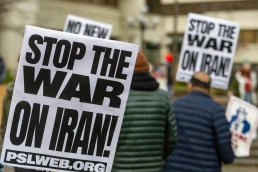
It seems clear from the course of events during the conference that they are not anywhere near making that choice. The U.S.’s short, very general, poorly proofread statement on the conference outcome reflected a lack of interest in or familiarity with the NPT and the institutions surrounding it. The U.S. chose to use the conference primarily as another forum to insist on its justification for its illegal attacks on Iran on the grounds that they are in service of nonproliferation, when by all appearances they are instead a risky, haphazard fulfillment of a long-treasured policy goal of the right wing of the American foreign-policy establishment. Russia’s statement glosses over its own recent record of nuclear threats in the context of the war in Ukraine, blaming “the delegations of the so-called collective West” for the outcome of the conference.
Observers have also noted a troubling trend in evidence in the negotiations over the outcome document, which summarizes the conclusions of the conference and, in theory, represents the consensus position of the participants. As Ray Acheson of Reaching Critical Will mentions in their op-ed on the conference’s conclusions, “the language on the catastrophic humanitarian consequences of any use of nuclear weapons has been distorted into a focus on nuclear war.” All prospective instances of nuclear use are not alike, but they are all a net catastrophic loss for humankind. As nuclear-armed states grow more and more comfortable with openly brandishing their nuclear arsenals to get what they want, it’s essential to defend the “nuclear taboo” against any use of nuclear weapons, not just a full-scale war.
On the first weekend of the conference, activists marched across town, banners flying, from the Public Library in Bryant Park to Dag Hammarskjöld Plaza, and the energy and optimism in the air was palpable. The conference provided, as it has historically, an opportunity for those working toward nuclear disarmament and a better nuclear status quo to gather, discuss, and reinvigorate a struggle that has seen some profound setbacks. There is still a robust international consensus around the urgency of nuclear risk reduction and the wisdom of pursuing disarmament, even if its connections to and influence on nuclear-armed governments is weakening. Multiple NGOs put forward stepwise plans to reduce the nuclear threat. The willpower, the expertise, and the plans are there, but nuclear-armed countries keep failing to step up and fulfill their responsibilities.
Ultimately, the inability to reach consensus on a final document itself reflects the actual status quo of nuclear-weapons politics as they stand. There’s still a consensus around much of the legacy of the 20th-century treaty regime that structures global nuclear weapons politics, to some extent. But the actions of the two largest nuclear-weapons states, the United States and Russia, ever more closely reflect a casual cynicism about the value of international law, or any law for that matter, as a brake on their actions. The NPT stands as an imperfect but not powerless organizing framework for a world still burdened with nuclear weapons – a framework that can point the way toward a less frightening status quo.
Recent Posts

Decoding Pro-Israel Buzzwords in a Time of Genocide
Take Action Now Support for Israel has declined steeply among Americans, but its defenders continue to maintain a siege of buzzwords against…

Tax the Rich and Slash the Military Budget
Take Action Now The Left is often asked how it proposes to pay for programs like universal childcare, Medicare or All, and a green jobs program.…

Israeli Mob Beats Washington Post Journalist, Burns Olive Trees In West Bank
Take Action Now “They just kept kicking me and kicking me,” photojournalist Heidi Levine recalled from a hospital bed after the attack.By Ryan…
Take Action October 20 to End the Illegal U.S.-Israeli War on Iran, #PeaceWithIranNOW
Take Action Now The war is not just illegal, but massively unpopular with the U.S. public, and Trump and his Republican enablers may take a deserved…