
The handling of the Kabul strike is an ominous sign that while Biden has pledged to review the drone program, a long-standing mechanism for self-exoneration remains entrenched.
By Jeremy Scahill, The Intercept
Over the past year, the number of reported U.S. drone strikes has plummeted. President Joe Biden did not authorize a single known strike for the first six months of his presidency before breaking his streak with a series of drone attacks against al-Shabab in Somalia in July. Despite the notable reduction, at least two of the strikes conducted under Biden have killed civilians, including the now-infamous August 29 attack in Kabul, Afghanistan, that killed 10 civilians, seven of them children. While Biden’s drone strike dataset is tiny, the outcome of his known strikes presents a ghastly civilian death rate. In the case of the Afghanistan hit, 100 percent of the victims were civilians.
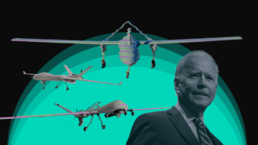
So what is happening? Why has Biden apparently decided to pump the brakes on a tool of war that he and President Barack Obama embraced so enthusiastically? For nearly a year, the Biden administration has been engaged in a comprehensive review of the use of drone strikes as part of a broader evaluation of “counterterrorism” policy that is expected to be completed later this year or at some point in early 2022. “I think the White House is appropriately wary about drone strikes,” said Rosa Brooks, a former Obama administration official who worked for the Pentagon as counselor to the undersecretary of defense for policy from 2009 to 2011. “My sense is that they’re serious about the review and are trying to minimize drone strikes at least until there is complete clarity on internal policies.”
Biden’s predecessor, Donald Trump, did away with most of the “rules” the Obama administration had crafted in what Obama characterized as an effort to increase transparency, reduce civilian deaths, and establish guidelines that could give some sense of legitimacy to what was, in reality, an assassination program. Biden could have stopped at rescinding Trump’s reversals and then resumed a course of regular drone strikes according to the rules developed primarily in Obama’s second term. But he didn’t. Instead, on the day of Biden’s inauguration, his national security adviser, Jake Sullivan, “quietly” issued an order to roll back Trump’s loosening of rules surrounding drone strikes, specifically one that bestowed on military commanders the power to authorize such strikes in undeclared war zones, like Somalia and Yemen, without direct permission from the White House. The Biden administration has not yet indicated whether it will revert to the Obama-era guidance for strikes or craft a new policy with more robust rules, particularly surrounding the issue of civilian deaths.
Recent Posts
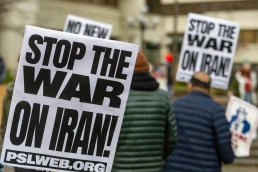
Take Action October 20 to End the Illegal U.S.-Israeli War on Iran, #PeaceWithIranNOW
Take Action Now The war is not just illegal, but massively unpopular with the U.S. public, and Trump and his Republican enablers may take a deserved…
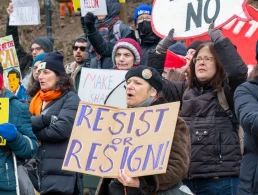
Chuck Schumer Hasn’t Said a Word About Trump’s Attempt to Deport Ilhan Omar
Take Action Now Ethics lawyers say the raid violated the Hatch Act. Schumer has been silent.By Sharon Zhang , Truthout Days after the Trump…

“Propaganda Show”: IDF Raids Palestinian NGOs in the West Bank Ahead of Israeli Elections
Take Action Now “The raid onto the city center Ramallah is not a lonely activity. It happens every day that they raid different villages,…
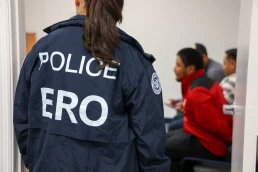
ICE Planning $100 Million ‘Nightmare’ Domestic Spy Program
Take Action Now Under ERO ONE, Immigration and Customs Enforcement plans to hire 142 intelligence contractors with top secret clearances and deploy…