
Jerusalem is bombing Damascus and threatening al-Sharaa’s rule, while Washington was hoping to help the nascent government on its feet.
By Safia K. Southey And Adam Weinstein, Responsible Statecraft
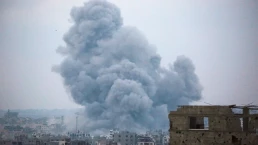
Israeli jets and drones hit Syria’s Defence Ministry compound and a second target near the presidential palace in central Damascus on July 16, causing a massive explosion and killing at least one and wounding 18, according to the Syrian Health Ministry.
Israel framed the attack as a warning to protect Syria’s Druze minority and warned that further “painful blows” would follow unless Syrian troops and allied militias withdraw from the south. Why would Israel bomb an important government building in Damascus purportedly on behalf of the Druze?
The Druze, a religious minority that is ethnically Arab, number about one million worldwide, roughly 700,000 of which live in Syria’s Suwayda governorate. Some 150,000 Druze hold Israeli citizenship and serve in the IDF, while another 20,000 Druze in the Israeli‑occupied Golan largely retain Syrian identity.
Parts of these constituencies have pressed Israeli Prime Minister Netanyahu to act but Israel has its own motivations, including the preservation of a Druze-dominated buffer zone in the south of Syria to insulate it from the new Syrian government which it views with great suspicion. Al-Sharaa’s government has adopted a congenial attitude towards Israel and expressed that it does not seek conflict. But the prevailing perspective in Israel is that al-Sharaa is attempting to consolidate power, and once he does, he may return to his jihadist roots.
This is one reason that immediately following the collapse of the Assad regime, Israel bombed much of Syria’s conventional military capacity. Another reason for the strike is that Israel likens itself as the protector of the Druze, both because there are Druze Israelis, and also because it supports Israel’s image as a multicultural society within a Jewish state.
Israel’s strike followed a week of heavy fighting in Suwayda that has left hundreds dead, including reported summary executions and a massacre at a hospital. The latest flare‑up began when Bedouin gunmen kidnapped and robbed a Druze vegetable merchant at an improvised checkpoint on the Damascus–Suwayda highway. Tit‑for‑tat abductions escalated into firefights, with Damascus insisting that it is fighting “outlaw gangs,” while Druze militias say government artillery and Bedouin auxiliaries have been firing indiscriminately.
Recent Posts
AI Doesn’t Need ‘Superintelligence’ or Evil Intent to Start a Nuclear War
Take Action Now Neither extraordinary machine intelligence nor malicious intent is required for catastrophe to result.By Paul Slovic and Herbert…

30 Months After Uproar Over Jonathan Glazer’s Oscar Speech, What Do His Pro-Israel Denouncers Say Now?
Take Action Now Given all that has happened, I recently contacted some signers of the open letter to ask whether they still fully believe in its…

Midterms Have Revived Universal Healthcare Debate. These States Are Ahead of Everyone.
Take Action Now States have often served as laboratories to test health policies later implemented nationally.By Markian Hawryluk, KFF Health……

Nobel Peace Prize Turns Toward Peace in 2026
Take Action Now To have finally acknowledged someone whose work in any way addressed the horrors of Zionism is an encouraging sign from the Nobel…