Around the world, dramatic swings between heavy rain and drought are increasing exponentially, according to new research.
By Kate Yoder, Grist
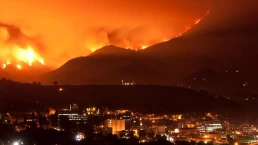
It’s supposed to be the rainy season in Southern California, but the last time Los Angeles measured more than a tenth-inch of rain was eight months ago, after the city logged one of the soggiest periods in its recorded history. Since then, bone-dry conditions have set the stage for the catastrophic wildfires now descending upon the metropolis from multiple directions.
This quick cycling between very wet and very dry periods — one example of what scientists have come to call “weather whiplash” — creates prime conditions for wildfires: The rain encourages an abundance of brush and grass, and once all that vegetation dries out, it only takes a spark and a gust of wind to fuel a deadly fire. That’s what happened in Los Angeles County this week, when a fierce windstorm fueled the Palisades and Eaton fires, which as of Wednesday night had killed at least five people, destroyed more than 2,000 buildings, and forced tens of thousands of people to evacuate their homes.
The kind of weather whiplash that fueled the fires is only becoming more common, and not just in the United States. A new analysis in the peer-reviewed academic journal Nature Reviews Earth & Environment has found that rapid shifts between heavy rain and drought (and vice versa) are becoming more intense — and the trend is unfolding faster than climate models have projected. Across the world’s land area, weather whiplash within three-month periods has increased by 31 to 66 percent since the mid-20th century, according to the research. That means that most places around the world find themselves getting both wetter and drier in quick succession, a dangerous combination that can lead to landslides, crop losses, and even the spread of diseases.
“The volatility of wet and dry extremes is this sort of emerging signature of climate change,” said Daniel Swain, a co-author of the paper and a climate scientist at the University of California, Los Angeles. “This year, unfortunately, I couldn’t have asked for a better poster child for this process than Southern California.”
Swain, along with researchers across the United States and in Switzerland, analyzed a flurry of recent research on what they refer to as “hydroclimate volatility” and developed a way to measure how it might get worse in the future. They found that the swings between very wet and very dry weather are rising exponentially for each passing fraction of a degree the globe warms.
Recent Posts
Getting Into ‘Good Trouble’ Over Arc de Trump
Take Action Now A retired Army colonel flew in from Hawaii to make sure Trump’s arch doesn’t go up quietlyBy Jonathan Capehart, Substack On the…

AIPAC’s Network Has Already Spent $67.2 Million to Shape the Midterm Elections
Take Action Now The giant influx from American Israel Public Affairs Committee PACs is a case study in money distorting politics.By Derek Seidman,…

Ed Sheeran’s Craven “Neutrality” Is a Watershed Moment for Mainstreaming Palestine Solidarity
Take Action Now Ed Sheeran’s entire tour quitting in solidarity with Palestine and Macklemore proves the logic of BDS.By Natasha Lennard, The…

Why Ro Khanna and AOC Should Run for President in 2028
Take Action Now This week, RootsAction teamed up with Progressive Democrats of America to announce that we will jointly launch, just after the…