
Leaders of the movement understood very well that if you can capture the courts, you can change society.
By Katherine Stewart, The Guardian
The supreme court decision in Dobbs v Jackson Women’s Health Organization, which reverses the constitutional abortion rights that American women have enjoyed over the past 50 years, has come as a surprise to many voters. A majority, after all, support reproductive rights and regard their abolition as regressive and barbaric.
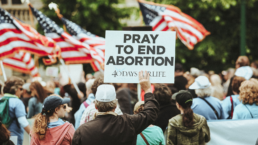
Understood in the context of the movement that created the supreme court in its current incarnation, however, there is nothing surprising about it. In fact, it marks the beginning rather than the endpoint of the agenda this movement has in mind.
At the core of the Dobbs decision lies the conviction that the power of government can and should be used to impose a certain moral and religious vision – a supposedly biblical and regressive understanding of the Christian religion – on the population at large.
How did this conviction come to have such influence in the courts, given America’s longstanding principle of church-state separation? To understand why this is happening now, it’s important to know something about the Christian nationalist movement’s history, how its leaders chose the issue of abortion as a means of creating single-issue voters, and how they united conservatives across denominational barriers by, in effect, inventing a new form of intensely political religion.
Recent Posts

Nobel Peace Prize Turns Toward Peace in 2026
Take Action Now To have finally acknowledged someone whose work in any way addressed the horrors of Zionism is an encouraging sign from the Nobel…
64 Groups to Congress: Start Preparing Tough and Effective Oversight Right Now
Take Action Now The question is not whether the public wants accountability, but whether Congress can conduct the meaningful oversight that exposes…

“Abolish ICE”: Protests Erupt in NYC After ICE Agents Shoot Father With 5-Year-Old Son in Car
Take Action Now “Candidates should seek support from the AI industry at their own peril.”By Amy Goodman, Darializa Avila Chevalier, and Carmen De…

Voters in Key States See AI Campaign Cash as More Politically Toxic Than AIPAC: Poll
Take Action Now “Candidates should seek support from the AI industry at their own peril.”By Jake Johnson, Common Dreams Polling data released…