Ten years ago today, Chicago teachers gave us all a jolt of hope.
By Alexandra Bradbury, LaborNotes
The Chicago Teachers Union’s 2012 strike didn’t just put the union on the map; it gave a jolt of hope to the whole labor movement.
When they started, their union had problems common to local unions across the U.S.: uninspiring leaders, inactive members, too few stewards, a heavy-handed employer, no strikes in recent memory, a general sense of passivity and hopelessness.
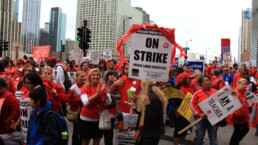
Yet just a few years later, 27,000 teachers in the nation’s third-largest district struck for a week and a half under the slogan “Fighting for the Schools Chicago’s Students Deserve,” rallying the public to their side and beating back a powerful mayor.
We drew lessons anyone could apply. These activists who formed the Caucus of Rank-and-File Educators (CORE) inside CTU succeeded because they trusted their fellow members and put getting members moving at the heart of their organizing.
They didn’t shy away from telling hard truths, like that Chicago schools were systematically shortchanging Black and Latino students. They set their sights high and built to a strike, even when the legal hurdles were supposed to make that impossible.
Recent Posts

The Courage to Keep the Oath
Take Action Now Why We Must Stand with Major Jason WatsonBy Jeffrey Sterling For almost two months, an Air Force officer has been sitting alone in…

‘Act of Collective Punishment’: Netanyahu Condemned Over ‘Full Lockdown’ of Occupied West Bank
Take Action Now The reaction to a shooting incident in Hebron, said one Palestinian critic, “represents an alarming escalation in Israel’s policies…

‘Stop The War on Iran’: Brooklyn Peace Activists Urge Jeffries to Help End Conflict
Take Action Now Democrats have a golden opportunity to capitalize on this issue, win big in November, and take real action on AI data centers to…

A Blue Wave Won’t Wash Away Our Oligarchy Problem
Take Action Now The massive election spending by Elon Musk and other billionaires is a huge problem, even if many of the superwealthy’s favorites…