Is it possible for American democracy to be further degraded by the influence of billionaires? Thanks to champion of the working class J. D. Vance and his right-wing friends, including “dark money kingpin” Leonard Leo, we may soon find out.
By Meagan Day, Jacobin
The Citizens United Supreme Court decision in 2010 is rightly remembered as a devastating blow to American democracy, spawning legions of super PACS and dark-money groups with unlimited funds to bring anyone who contravenes donor interests to heel. Outside spending in federal elections has skyrocketed from $730 million at the time of the ruling to a staggering $4.5 billion in 2024.
Now the Supreme Court dares to ask the question: Is it possible to make this bad situation even worse?
The court just agreed to hear a case in the fall that could result in undermining already-weakened campaign finance law. The plaintiffs in National Republican Senatorial Committee et al v. Federal Election Commission et al are seeking to emulate the Citizens United strategy, positing moneyed influence in politics as a First Amendment freedom. Federal restrictions limiting coordination between national party committees and candidates would be abolished.
A ruling in the plaintiffs’ favor would mean that corporations and wealthy individuals could spend freely on committees, which could then funnel money to candidates, bypassing existing finance restrictions (which created the need for super PACs in the first place). The Lever calls the upcoming case a “corruption bomb” and estimates that its impact will rival Citizens United if its plaintiffs are successful in winning over the Supreme Court.
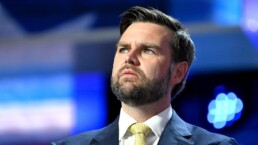
The case originated from a 2022 Ohio lawsuit filed by current vice president and self-styled champion of the working class J. D. Vance. The case was designed to ascend through the court system to the Supreme Court, where it could serve as a pretext for overturning a previous ruling against exactly the kind of regulation skirting its plaintiffs are after. Vance’s original lawsuit was part of a broader coordinated strategy by conservatives to chip away at the last remaining protections against corporate money in politics.
Perversely, the Republican plaintiffs have argued their case by citing the rise of super PACs since Citizens United as a problem, claiming that their preferred outcome would slow their ascent. That’s one way to look at it, I suppose. If corporations and billionaires have yet another wide-open channel through which to influence the US electoral system and they’re able to spend directly on party committees, that probably will minimize those corporations’ and billionaires’ need for Super PACs. It would also increase their overall influence in politics.
The Trump administration, through the Department of Justice, declined to defend existing federal campaign finance laws. Instead, the administration submitted a brief to the Supreme Court supporting the plaintiffs. Dark-money groups spent $1.9 billion on the 2024 federal election cycle, up from $1 billion in 2020, with the bulk of it going to Trump’s presidential campaign.
Recent Posts
AI Doesn’t Need ‘Superintelligence’ or Evil Intent to Start a Nuclear War
Take Action Now Neither extraordinary machine intelligence nor malicious intent is required for catastrophe to result.By Paul Slovic and Herbert…
30 Months After Uproar Over Jonathan Glazer’s Oscar Speech, What Do His Pro-Israel Denouncers Say Now?
Take Action Now Given all that has happened, I recently contacted some signers of the open letter to ask whether they still fully believe in its…
Midterms Have Revived Universal Healthcare Debate. These States Are Ahead of Everyone.
Take Action Now States have often served as laboratories to test health policies later implemented nationally.By Markian Hawryluk, KFF Health……
Nobel Peace Prize Turns Toward Peace in 2026
Take Action Now To have finally acknowledged someone whose work in any way addressed the horrors of Zionism is an encouraging sign from the Nobel…