Federal protections of abortion rights have always been limited, but community care and support are the future of reproductive freedom.
By Steph Black, The Progressive Magazine
The 1973 Roe v. Wade decision was a bare-minimum protection of abortion rights. The case argued that the choice to terminate a pregnancy was a matter of privacy, a decision between a pregnant person and their doctor. While the decision made it impossible for the government to directly interfere with the procedure itself, Roe and the 1993 Casey v. Planned Parenthood left room for states to legislate abortion away by creating arbitrary barriers.
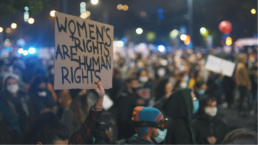
This means that gestational limits on abortion, mandatory waiting periods, medically inaccurate “counseling,” and a prohibition on using federal dollars to fund abortion have created a reality for many that makes abortion impossible to access.
In fact, many people have been living in a post-Roe reality for a long time.
“Roe is the floor and not the ceiling” is a common rallying cry around efforts to pass the Women’s Health Protection Act, which would codify Roe in federal law. But even as a floor, it’s a poor one at best. The very act of putting a boundary on abortion opened the door for that right to be chipped away, piece by piece, even if there wasn’t much there to begin with.
Recent Posts
Christa Pike Hospitalized in Critical Condition After Botched Execution
Take Action Now “I’ve never seen anything like what we saw Wednesday night,” said one reporter who witnessed the execution attempt.By Amy Goodman,…
Rights, Faith Groups Urge Congress to Block $2.8B Bomb Sale to Israel
Take Action Now If the Trump administration moves forward with the transfer, dozens of groups are urging lawmakers to seek a joint resolution of…
Trump’s Finger Gets Closer to Nuclear Button
Take Action Now Not that Congress caresBy Ken Klippenstein, Substack The Pentagon is “increasing [nuclear] options available to the President for…
Impeachment Calls Grow as Dems Say Up to $20 Million in Taxpayer Funds Were Used for ‘Illegal’ Pro-Trump Ads
Take Action Now “We should not have to remind you that using government funding to create or air political ads like the ones that have been running…