
Uncontrolled gas leaks and flaring are pushing the planet toward catastrophe.
By Kate Yoder, Grist
This story was originally published by Grist. You can subscribe to its weekly newsletter here.
Methane emissions rose by a record amount last year, making the biggest jump since the National Oceanic and Atmospheric Administration began monitoring them 40 years ago. Carbon dioxide emissions also climbed at a historically high rate for the 10th straight year.
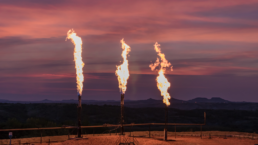
The new numbers come on the heels of the latest report from the Intergovernmental Panel on Climate Change, in which scientists warned that the world is on track for catastrophic warming, with fossil fuel emissions driving an “almost inevitable” breakdown of some of Earth’s life-supporting systems.
“Our data show that global emissions continue to move in the wrong direction at a rapid pace,” Rick Spinrad, NOAA’s administrator, said in a statement. “The evidence is consistent, alarming, and undeniable.”
Methane, a potent greenhouse gas, leaks out of oil wells and gas pipes, vents from rotting food in landfills, and escapes from cows in their burps and manure. It’s one of the main drivers of climate change, responsible for 30 percent of the warming since preindustrial times, second only to carbon dioxide. While methane doesn’t linger in the atmosphere as long as CO2, it’s much more powerful at heating the planet in the short term.
That makes cutting methane emissions a high priority. But as the new data from NOAA show, the world is heading in the wrong direction. Atmospheric levels of methane jumped 17 parts per billion in 2021, beating the previous record set in 2020.
This surge is happening just as methane is getting more recognition as a problem that requires urgent action. Last fall, the United States and European Union initiated an effort to cut methane emissions 30 percent by the end of the decade. Roughly 100 countries have joined the Global Methane Pledge since then, minus a few of the top emitters, like China and Russia. A new initiative called the Global Methane Hub launched this week to support these efforts, putting $340 million toward helping countries track and reduce emissions.
Measuring methane accurately has proven to be a challenge of its own. A report from the International Energy Agency in February found that governments were undercounting methane emissions from oil, gas, and coal, which satellite data showed were about 70 percent higher than previously estimated.
But on the bright side, the IEA said, many of these emissions could be trimmed relatively easily by installing leak-proof equipment and putting a stop to the common practice of burning surplus natural gas, known as flaring. Rapid cuts to global methane emissions, according to one study, could stave off half a degree Celsius (nearly 1 degree Fahrenheit) of warming by the end of the century. These reductions could have quick effects, as methane disappears from the atmosphere after about nine years.
Carbon dioxide, on the other hand, can continue to warm the atmosphere for thousands of years. 2021 marked the 10th year in a row that CO2 emissions had risen by more than 2 parts per million, “the fastest sustained rate of increase in the 63 years since monitoring began,” according to NOAA.
Today’s atmospheric concentration of carbon dioxide is as high as it was 4.3 million years ago — when the sea level was roughly 75 feet higher, the Arctic was covered in forests, and global temperatures were 7 degrees F hotter than right before the Industrial Revolution.
Recent Posts
Tax the Rich and Slash the Military Budget
Take Action Now The Left is often asked how it proposes to pay for programs like universal childcare, Medicare or All, and a green jobs program.…

Israeli Mob Beats Washington Post Journalist, Burns Olive Trees In West Bank
Take Action Now “They just kept kicking me and kicking me,” photojournalist Heidi Levine recalled from a hospital bed after the attack.By Ryan…
Take Action October 20 to End the Illegal U.S.-Israeli War on Iran, #PeaceWithIranNOW
Take Action Now The war is not just illegal, but massively unpopular with the U.S. public, and Trump and his Republican enablers may take a deserved…
Chuck Schumer Hasn’t Said a Word About Trump’s Attempt to Deport Ilhan Omar
Take Action Now Ethics lawyers say the raid violated the Hatch Act. Schumer has been silent.By Sharon Zhang , Truthout Days after the Trump…