
The defeat in Afghanistan offers a chance to rethink America’s war machine, but Congress is on the verge of raising military spending to $740 billion.
By Peter Maass, The Intercept
Around midday on August 15, the president of Afghanistan, Ashraf Ghani, was told by an adviser that Taliban fighters had entered the presidential palace and were looking for him room by room. This was not true, but Ghani, aware that ousted presidents do not have long lives in his country, hurried himself and his wife to a military helicopter and fled for Uzbekistan. Without time to fetch any personal belongings, he left Kabul in plastic sandals and a thin coat, according to a Washington Post account of that day.
Afghanistan was supposed to be the “good war” after 9/11, the one with a legitimate purpose and a happy ending. That also didn’t turn out to be true, but while the war’s momentum favored the Taliban for years, its final act had the suddenness of a guillotine, with a lot more pain. At Kabul’s airport, desperate Afghans clung to the sides of a departing U.S. cargo plane. Panicked families tried to get onto the diminishing number of evacuation flights. And 13 U.S. troops helping keep the airport open were killed in a suicide bombing. Just before midnight on August 30, the last U.S. aircraft and the last U.S. soldier got out of Kabul.
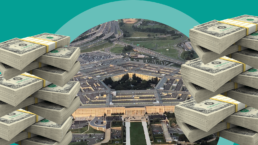
This defeat could have been an opportunity to rethink the logic of America’s war machine. That’s what defeats often do: They force you to reconsider the destructive tendencies that got you into the hole. One of those tendencies has been a nearly ceaseless rise in military spending that has little popular support. Even before the fall of Kabul, opinion polls consistently showed that only a minority of Americans think that the U.S. should spend more on its defense — just 26 percent in a survey conducted by Gallup in February. And on the day that the U.S. got out of Afghanistan, Rep. Barbara Lee, D-Calif., the lone member of Congress to vote against the invasion in 2001, called on Republicans as well as Democrats to finally reconfigure the nation’s spending priorities. “Now is the time to shift our investments away from endless wars and toward addressing human needs,” she said.
Recent Posts

“Abolish ICE”: Protests Erupt in NYC After ICE Agents Shoot Father With 5-Year-Old Son in Car
Take Action Now “Candidates should seek support from the AI industry at their own peril.”By Amy Goodman, Darializa Avila Chevalier, and Carmen De…

Voters in Key States See AI Campaign Cash as More Politically Toxic Than AIPAC: Poll
Take Action Now “Candidates should seek support from the AI industry at their own peril.”By Jake Johnson, Common Dreams Polling data released…

Everything You’ve Been Told About Lethal Injection Is a Lie
Take Action Now Death by drugs is brutal—and designed for political optics. Christa Pike’s failed execution pulled back the curtain.By Arianna…

British Support For Israel Is Shattering
Take Action Now There is not a single member of the Foreign and Commonwealth Office who believes that Israel, under any leadership, would allow a…