As the case threatens access to abortion care nationwide, advocates highlight the need to support local abortion funds and advocacy groups in the most restrictive states
By Alexandra Martinez, Prism
The landmark U.S. abortion rights case Roe v. Wade is in jeopardy. The U.S. Supreme Court heard arguments in Dobbs v. Jackson Women’s Health Center Wednesday morning, and reproductive rights organizers are concerned the conservative justices on the bench will strike down Roe v. Wade, stripping pregnant people of constitutionally protected abortion rights and freeing states to ban the procedure. The case likely won’t be decided until June 2022, but the consequences would be devastating and far reaching for people seeking abortion care across the country, with the potential to trickle down into other reproductive rights issues, including contraception.
“If Roe is overturned, it’ll be detrimental for the women in Mississippi,” said Shannon Brewer, clinic director of Jackson Women’s Health Organization. “It’s going to affect so many women, the African American women, the low-income women. These people who need it the most are the ones who will be losing this.”
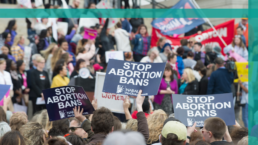
The law at the heart of the Supreme Court hearing is a 2018 Mississippi law that bans abortion after 15 weeks of pregnancy. It was struck down by lower courts as unconstitutional because it violates the viability standard set out in Roe, which is now understood to be between 23-24 weeks. The state of Mississippi asked the Supreme Court to take the case after the Fifth Circuit Court of Appeals struck the law down in 2019. Now they are actively calling on the Court to overturn Roe v. Wade and other landmark abortion risks cases including Planned Parenthood v. Casey, which established an undue burden standard for abortion restrictions, stating that a legislature cannot make a particular law that is too burdensome or restrictive of one’s fundamental rights. In a country where 54,000-to-63,000 people get abortions after 15 weeks every year, the ban would force people to either continue unwanted pregnancies or seek abortions in states that permit the procedure, and could also lead to to civil penalties for physicians, including suspension or revocation of their medical licenses.
Recent Posts
Getting Into ‘Good Trouble’ Over Arc de Trump
Take Action Now A retired Army colonel flew in from Hawaii to make sure Trump’s arch doesn’t go up quietlyBy Jonathan Capehart, Substack On the…

AIPAC’s Network Has Already Spent $67.2 Million to Shape the Midterm Elections
Take Action Now The giant influx from American Israel Public Affairs Committee PACs is a case study in money distorting politics.By Derek Seidman,…

Ed Sheeran’s Craven “Neutrality” Is a Watershed Moment for Mainstreaming Palestine Solidarity
Take Action Now Ed Sheeran’s entire tour quitting in solidarity with Palestine and Macklemore proves the logic of BDS.By Natasha Lennard, The…

Why Ro Khanna and AOC Should Run for President in 2028
Take Action Now This week, RootsAction teamed up with Progressive Democrats of America to announce that we will jointly launch, just after the…