
The chances for durable peace may depend on Trump’s whims.
By Joshua Leifer, Dissent
On Sunday, after a delay of several hours, the long-hoped-for ceasefire agreement between Israel and Hamas finally went into effect. At around 5:00 p.m. in Gaza City, uniformed Hamas militants appeared in Saraya Square to initiate the transfer of three female Israeli hostages—Romi Gonen, Doron Steinbrecher, and Emily Damari—to the hands of the Red Cross, and then on to Israel. In the plaza dubbed “Hostages Square” in central Tel Aviv, a crowd stood in electric silence, watching the scene unfold on a large-screen TV. Meanwhile, in the occupied West Bank, the Israel Prison Service began preparing for the release of ninety Palestinian female and child prisoners that night, among them Khalida Jarrar, a leading member of the Popular Front for the Liberation of Palestine, and Shatha Jarabaa, a twenty-four-year-old from Ramallah arrested for social media posts. In Gaza, millions of Palestinians displaced during Israel’s catastrophic assault started the journey back to the ruins of their homes to search for the remains of loved ones beneath the rubble, accompanied by the persistent hum of Israeli drones.
The agreement is to unfold in three phases. In the first six-week phase, Israel will withdraw its forces from the heart of the devastated territory to the kilometer-wide buffer zone near the separation barrier, established through the systematic demolition of Palestinian houses. In exchange for thirty-three hostages held by Hamas—children, women, the elderly, and the injured—Israel will release more than 1,000 Palestinians (thirty Palestinian detainees for each civilian, and fifty Palestinians for each female soldier). As the first phase proceeds, the two sides will begin negotiating the subsequent two phases, during which the remaining Israeli hostages, alive and dead, will be released and Israeli troops will withdraw fully from the strip.
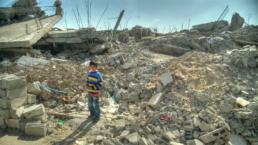
Beneath the joy of Israeli hostages rejoining their families and Gazans celebrating an end to the bombardment is a deep sense of grief. The current ceasefire agreement is barely different from the one that has been on the table since last spring. That it went unsigned was due to a combination of Netanyahu’s lethal intransigence and U.S. Secretary of State Antony Blinken’s shameful fecklessness. Netanyahu, whose primary concern throughout the last 470 days has been his political survival—to remain in power and avoid his ongoing corruption trial—would not risk fracturing his hard-right government, given his coalition partners’ adamant opposition to any halt in the fighting and their messianic aspirations to reoccupy and resettle the Gaza Strip. Blinken, for his part, like many in the Biden administration, appeared to lack the will needed to exert any serious pressure on Netanyahu. If Biden’s triumphal remarks about the “changed regional equation” in his address last Wednesday are any indication, his administration may have also considered the continuation of Israel’s brutal campaign in Gaza conducive to achieving its larger geopolitical aims. The war did not end sooner because the Biden administration did not insist that it needed to.
Recent Posts

“Propaganda Show”: IDF Raids Palestinian NGOs in the West Bank Ahead of Israeli Elections
Take Action Now “The raid onto the city center Ramallah is not a lonely activity. It happens every day that they raid different villages,…

ICE Planning $100 Million ‘Nightmare’ Domestic Spy Program
Take Action Now Under ERO ONE, Immigration and Customs Enforcement plans to hire 142 intelligence contractors with top secret clearances and deploy…

Postpone the AI Public Offerings Until Congress Acts
Take Action Now A company should not disclose a risk of catastrophe to humanity and then sell its shares to the public before any public authority…

Congress Has The Power to Fix the Trump-Saudi Nuclear Deal
Take Action Now Congress has at least 9 months and considerable leverage to make things right.By Alan J. Kuperman, Bulletin of the Atomic…