Congress has at least 9 months and considerable leverage to make things right.
By Alan J. Kuperman, Bulletin of the Atomic Scientists
Press reports claim that Congress cannot stop the Trump administration’s nuclear agreement with Saudi Arabia, despite significant proliferation concerns, because it will enter force automatically in a mere 90 days after its August 24 submittal to Capitol Hill. Democrats and a handful of dissenting Republicans could try to pass a disapproval resolution that was introduced recently in both houses. But President Donald Trump could veto it, and Republicans in Congress would not override that veto, which means the deal is essentially a fait accompli.
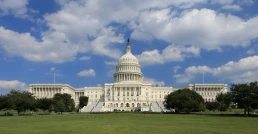
In reality, however, the prospects of Congressional action are not so bleak. Because of the US Atomic Energy Act’s fine print and the deal’s legal shortcomings, Congress has at least 9 months and considerable leverage to make things right.
Proliferation concerns. Three aspects of the Saudi deal are most objectionable. First, the agreement explicitly refers to uranium enrichment “technologies that could be deployed in the Kingdom of Saudi Arabia.” The danger is that any enrichment technology provided for peaceful purposes could also make weapons-grade uranium or be duplicated to do so secretly elsewhere in the country. Moreover, allowing Saudi enrichment could spur similar demands from other countries in the region and beyond, spreading the risks.
Second, the Saudis have refused to sign the Additional Protocol of the International Atomic Energy Agency (IAEA), which allows “environmental sampling” to detect illicit nuclear activity at sites “other than those” disclosed by the country. Riyadh instead has signed a bilateral safeguards agreement with Washington, which does not permit such inspections of undeclared facilities. This feeds suspicion that the Saudis are contemplating secret bomb plants.
Recent Posts
AI Doesn’t Need ‘Superintelligence’ or Evil Intent to Start a Nuclear War
Take Action Now Neither extraordinary machine intelligence nor malicious intent is required for catastrophe to result.By Paul Slovic and Herbert…

30 Months After Uproar Over Jonathan Glazer’s Oscar Speech, What Do His Pro-Israel Denouncers Say Now?
Take Action Now Given all that has happened, I recently contacted some signers of the open letter to ask whether they still fully believe in its…

Midterms Have Revived Universal Healthcare Debate. These States Are Ahead of Everyone.
Take Action Now States have often served as laboratories to test health policies later implemented nationally.By Markian Hawryluk, KFF Health……
Nobel Peace Prize Turns Toward Peace in 2026
Take Action Now To have finally acknowledged someone whose work in any way addressed the horrors of Zionism is an encouraging sign from the Nobel…