
The Supreme Court decision will embolden presidents to undertake an even more reckless foreign policy.
By Robert Pallitto, Foreign Policy In Focus
Last week’s immunity decision by the U.S. Supreme Court will strengthen presidential power in multiple domains, including foreign policy. Given the already robust state of institutional power and autonomy the office has come to possess in recent years, this ruling’s new departure from existing limits is troubling.
By declaring that the president is immune from prosecution, the Court goes beyond existing safeguards in criminal law. As Justice Jackson explains in her dissent, immunity in criminal cases is distinct from the other protections provided by law to a criminal defendant, such as presumption of innocence beyond a reasonable doubt, access to legal counsel, trial by jury, due process generally, and affirmative defenses. An affirmative defense allows, among other things, for defendants to say that even if the elements of a criminal offense can be shown by the facts, their conduct was nonetheless justified. The “public authority” defense, for example, suggests that an official should not be found guilty if acting on the basis of state (public) authority. That defense was already available to Trump, but the immunity shield is fundamentally different because, as Jackson explains, a president is now immune from all suits. There is no need for a trial court to assess what defenses might apply in a given criminal case because immunity prevents the case going forward at all. Such a barrier is obviously helpful to a president-as-defendant, but is it good for the republic? A closer look at the components of the decision reveals reasons to worry.
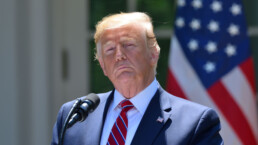
There are three parts to the new presidential immunity. First, actions taken under core constitutional powers are absolutely immune: for example, use of the pardon power or the appointment power stated explicitly in Article II. The reasoning here is that presidents cannot effectively do their job with a threat of prosecution looming, and therefore the principle of separation of powers requires that those core powers be unfettered, beyond the reach of criminal statutes. Second, official presidential acts are also immune up to the “outer perimeter” of a president’s official functions (that is, defining “official” very broadly). Thus, even if an action does not proceed directly from an expressly stated power, it will be protected by immunity even to the outer limit of what is reasonably considered official. Unofficial acts do not qualify for immunity under the Court’s holding, but the realm of the unofficial has been narrowly circumscribed. And there is one more wrinkle. Even in prosecutions involving unofficial acts, evidence of motive may not be derived from presidential acts categorized as official. Here the majority opinion is most opaque—and in fact, one of the six majority justices (Barrett) declined to join the motive-related section of the opinion, leaving it at a bare majority of five.
Recent Posts
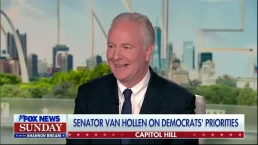
‘This Is a Wide Open Race,’ Says Van Hollen as Support for His Majority Leader Bid Grows
Take Action Now “We need to earn people’s trust,” said Sen. Chris Van Hollen. “And I don’t think you do that by simply going back to business as…
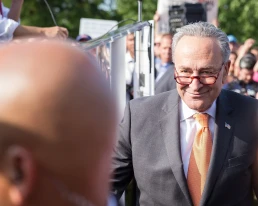
Replace Chuck Schumer—Honor an Election of Change
Take Action Now Schumer never invested in Louisiana, where Democrats lost by less than two points after July and September polls showed they were…
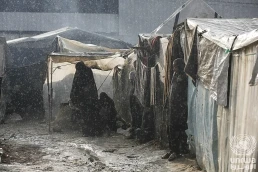
1.4 Million People in Gaza Live in Tents. Winter Storms Can Be a Death Sentence.
Take Action Now Making unlivable conditions even more dire, flooding in Gaza is just the first disaster of a long winter to come.By Shahad Ali,…

Schumer, Who’s More Unpopular Than Trump, Gets a Challenger for Majority Leader
Take Action Now Trump has hit record low approval ratings during his second term, but even fewer Americans approve of Schumer.By Sharon Zhang,…