
We can’t accept the rules of recognition set by the very powers that dispossess us, especially the idea that our success is what makes us worthy of protection.
By Sleman Altehe, +972 Magazine
Last night, armed Israeli settlers descended upon the Palestinian village of Susiya in the Masafer Yatta region of the occupied West Bank and assaulted Hamdan Ballal, a contributor to +972 and co-director of the film “No Other Land” which recently won an Oscar for best documentary. Israeli soldiers were present at the scene and stood by as Ballal was attacked along with other residents and activists, only to then detain him and two other Palestinians overnight in a military base, where they endured further abuse.
When news broke of the settler ambush, the headlines focused almost exclusively on one thing: Ballal’s Oscar win. Across mainstream Western media — from the Associated Press and Reuters, to the Washington Post and the BBC — publications used surprisingly direct language to describe the attack on this “Palestinian Oscar winner.”
Unlike some of their coverage of Israel’s genocidal war in Gaza, for instance, these outlets clearly named the perpetrators of the assault — Israeli settlers — with one traditionally liberal publication going so far as to describe his brutal arrest by the Israeli army as a “kidnapping.” But still, the emphasis was clear: the assault and detention of a Palestinian is notable because he holds international acclaim.
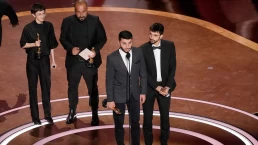
Of course, what happened to Ballal is not random. As co-director of a film that documents the ethnic cleansing of Palestinians and the violent expansion of Israeli settlements in the villages of Masafer Yatta, he has used his platform to speak directly and unapologetically about Israeli apartheid and dispossession. Targeting him is part of a broader strategy of silencing Palestinian cultural figures and truth-tellers, especially those who succeed in disrupting dominant narratives on global stages.
But the framing of his assault and arrest should alarm us. Why must a Palestinian’s intellectual recognition be the basis for solidarity? Why does the global media insist on highlighting that Ballal is an Oscar-winning filmmaker?
This kind of solidarity, grounded in fame or intellectual achievement, dangerously aligns with colonial patterns of recognition. It reproduces the logic that some lives — those legible to Western audiences — are more grievable, more shocking to violate, and more worthy of defense.
Recent Posts
AI Doesn’t Need ‘Superintelligence’ or Evil Intent to Start a Nuclear War
Take Action Now Neither extraordinary machine intelligence nor malicious intent is required for catastrophe to result.By Paul Slovic and Herbert…
30 Months After Uproar Over Jonathan Glazer’s Oscar Speech, What Do His Pro-Israel Denouncers Say Now?
Take Action Now Given all that has happened, I recently contacted some signers of the open letter to ask whether they still fully believe in its…

Midterms Have Revived Universal Healthcare Debate. These States Are Ahead of Everyone.
Take Action Now States have often served as laboratories to test health policies later implemented nationally.By Markian Hawryluk, KFF Health……
Nobel Peace Prize Turns Toward Peace in 2026
Take Action Now To have finally acknowledged someone whose work in any way addressed the horrors of Zionism is an encouraging sign from the Nobel…