
As we hit the 1.5-year point in the current catastrophe in Ukraine — and other wars, larger and smaller, roll on without end — the polls are beginning to do what they always do.
By David Swanson, World BEYOND War
The better part of a year into the current phase of the war in Ukraine, General Mark Milley accidentally blurted out that peace talks might be a good alternative to an endless bloody war for the same results. Now it’s becoming more acceptable in Washington, D.C., to anonymously whisper that he was right. But we’re lifetimes away from it becoming acceptable to mention that every single principled peace advocate on Earth had expressed that opinion openly and clearly several months earlier. It hasn’t even yet become acceptable to admit who was right about any past wars. The Korean War comes to mind as a vastly more destructive debacle. Smart people predicted what would happen at the start but have not been listened to the slightest bit more in the years after millions were killed by those with lives that matter, of whom tens of thousands would “die for a tie.”

As we hit the 1.5-year point in the current catastrophe in Ukraine — and other wars, larger and smaller, roll on without end — the polls are beginning to do what they always do. With Afghanistan and with Iraq, after about this much time you began to have U.S. majorities declare that the wars never should have been started. With Ukraine, this indicates a certain ability to care about (white) people who are not from the United States, but more so an ability to recognize that wars and militaries cost money. That could yet prove an incredibly valuable breakthrough. With Afghanistan and Iraq, the polls showed, for years, strong majorities both sure that the war they’d cheered and drooled and screamed for should never have happened and hesitant about ending it. This was principally a result of the doctrine of troopism: Thou shalt kill more troops so as not to have already killed troops in vain. But with Ukraine, it’s weapons (or, in the misleading media narrative, dollars) being sent, not troops. Nobody is proposing to send more weapons for the sake of the weapons already sent. So, there is the possibility of the U.S. public really turning against this war more quickly. (Of course it’s a public of the other partisan makeup, so we’ll have to see what that means.)
When the public turns against a war, the corporate media begins searching for wise voices. These are the voices of people who’ve supported disastrous war after sadistic horror after losing debacle for decades but who made some comment about certain reservations they might have had about this particular war. Maybe they accidentally exclaimed something about the financial cost in the presence of a reporter, or they put their name on a report at a weapons-funded stink tank about the greater importance of planning a war on China, or whatever. Today you have people shamelessly campaigning for Congress on their record of helping to destroy Iraq and murder a million Iraqis. And one reason why is that there was never any acknowledgement of the many individuals who were right about that war before it was begun, or even of the majority of voters who in 2006 said they were voting to end that war but ended up electing a Democratic Congress that esclated the war instead.
Of course, there were people inside the military establishment admitting privately (but not so privately) that the “surge” in Iraq wouldn’t accomplish its purported goals, and pointing out problems with the war from before day one — never moral problems, of course, but real and accurate and fairly obvious problems with foreign occupations. And of course there have been people on both sides of the current war in Ukraine privately (but with leaks) pointing out that there’s no victory in sight for either side. One of the reasons that peace activists have such an incredible streak of accuracy is that they look at what militaries are whispering and leaking, rather than believing highly improbable hype. But in the media’s “first draft of history” every intelligent person alive is supposed to have believed stupid stories about speedy victories, so that Milley’s accidentally saying the quiet part aloud is not understood as blurting out something forbidden but as actually grasping some unique insight into a problem the world’s thinkers were otherwise universally failing to comprehend.
But the people who get wars right time after time after time do so not simply by being willing to say what the corporate communications system forbids, but also by considering factors outside of how much money can be made off weapons, how many votes can be gained from machismo, how many interviews can be garnered by wartime rhetoric, or even how many years and bodies will be required to achieve some purpose. Other factors often considered include the increased risk of nuclear apocalypse, the financial tradeoffs, the impediments created to global cooperation on non-optional crises, the environmental destruction, the damage to politics and society at home, and of course the possibilities for resolution without killing, with better results possible prior to more death and destruction and bitterness and the building up of propaganda by each side about the other.
I’ve been reading a new book called My Country Is the World, a collection of speeches and interviews and articles by Staughton Lynd. Here’s someone who was right about the war on Vietnam prior, during, and after. And as a reward he was driven out of academia and erased. For some years in the 1960s he was able to find a voice in corporate newspapers and television. The transcript in the book of a debate with William F. Buckley is an exchange of opposing worldviews that never happens in U.S. media today — not because the “two sides” isolate, but because Buckley’s views are now pretty well established as the only possible views by every media outlet with money.
In Jonathan Eig’s new biography of Martin Luther King, there’s a part, near the end, where some of King’s friends and allies are upset at how willing he is to go against the advice of all of them, and yet how concerned he is not to displease others. When King wants to keep an appointment with Staughton Lynd, Bayard Rustin exclaims “Who the hell is Staughton Lynd?” The whole damn country might ask that. He’s certainly not someone with a national holiday, children’s books, monuments, and so forth. But, tweak the details, and he’s someone who has already eloquently debunked the next war the Pentagon comes up with. He’s one of thousands about whom we really should be asking, in all seriousness, and with the intention of educating ourselves: who the hell are they?
Recent Posts
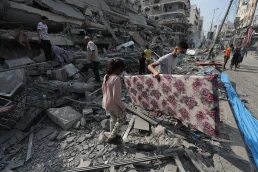
Why Do We Let Zionists Decide What We Can and Can’t Say?
Take Action Now Kraft is a man who appears in the Epstein files, was twice caught on camera with prostitutes, donates heavily to the IDF, and even…
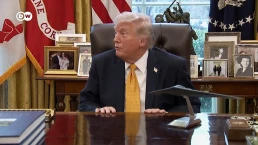
Trump Says He’s Banning CNN, MS NOW, and Politico From the White House
Take Action Now “These outrageous attacks only demonstrate how scared he is of an informed public,” said one press freedom advocate.By Stephen…

Bases Without Names: How Governments Rebrand the U.S. Military Presence
Take Action Now Across Asia, Europe and the Middle East, governments use an expanding vocabulary to describe sites that accommodate U.S. troops,…
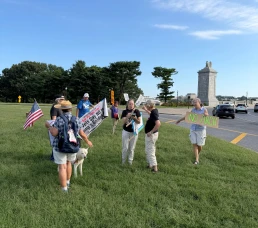
Getting Into ‘Good Trouble’ Over Arc de Trump
Take Action Now A retired Army colonel flew in from Hawaii to make sure Trump’s arch doesn’t go up quietlyBy Jonathan Capehart, Substack On the…