By Glenn Daigon, The Progressive
Earlier this month, a twenty-year-old University of Wisconsin–Madison student named Mike Islami told NPR he believes abortion is “a women’s right,” and that the issue was “definitely in the back of my mind” when he cast his ballot.
Islami voted for Donald Trump, whose Supreme Court appointments overturned Roe v. Wade.
These types of mixed political signals were not a fluke this November. While the electorate largely voted in favor of progressive economic and social initiatives placed on state ballots earlier this month, they simultaneously voted for candidates who stood steadfastly against those very policies.
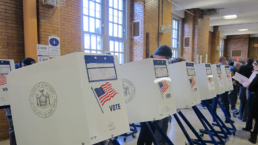
This year, Democratic voters approved a range of ballot initiatives in support of abortion rights, a $15 an hour minimum wage, and paid leave The Democratic Party spent hundreds of millions of dollars on a reproductive rights campaign in an attempt to capitalize on support for abortion rights, and supported ten state ballot initiatives before voters in states including Montana, Nevada, Arizona, Colorado, Missouri, and Maryland, passing in them all. In Florida, some Democrats hoped that a constitutional amendment guaranteeing the right to abortion up to the point of viability would help boost their voter turnout and flip the state blue. The amendment garnered a solid 57 percent majority (a higher percentage than Trump garnered), but fell short of the 60 percent needed for a constitutional amendment—a requirement enacted in 2006 with the help of Florida Republicans and business interests. Ballot measures to protect abortion rights also failed in South Dakota and Nebraska.
Why didn’t this effort pay off? What seems to have happened is that voters compartmentalized their support for popular ballot issues and their support for candidates running for office.
“When voters go to the booths, they don’t see a ‘D’ or an ‘R’ next to a ballot measure,” Chris Melody Fields Figueredo, director of the Ballot Initiative Strategy Center, a nonprofit dedicated to advancing progressive economic and social ballot initiatives, tells The Progressive. “They really just see the opportunity to take power and agency into their own hands and raise the minimum wage in their state, or offer paid sick leave.”
Recent Posts

Voters in Key States See AI Campaign Cash as More Politically Toxic Than AIPAC: Poll
Take Action Now “Candidates should seek support from the AI industry at their own peril.”By Jake Johnson, Common Dreams Polling data released…

Everything You’ve Been Told About Lethal Injection Is a Lie
Take Action Now Death by drugs is brutal—and designed for political optics. Christa Pike’s failed execution pulled back the curtain.By Arianna…

British Support For Israel Is Shattering
Take Action Now There is not a single member of the Foreign and Commonwealth Office who believes that Israel, under any leadership, would allow a…
I’ve Covered Death Row Cases for Nearly a Decade. What Happened to Christa Pike Wasn’t an Anomaly.
Take Action Now Several states have faced questions about the competence of their execution teams as major medical organizations have opposed…