
If Biden still seeks to ensure safety and prosperity for the American people, increasing Pentagon spending on nuclear weapons is not the way to go.
By Christian Ephriam, National Priorities Project
It appears that, once again, Congress will pass a colossal military spending budget as part of the FY23 National Defense Authorization Act. This June, the Senate Armed Services Committee voted to tack an additional $45 billion dollars onto Biden’s proposed national defense budget, raising the topline figure to a whopping $847 billion dollars.
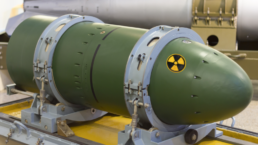
A major component of this year’s proposed defense budget, much like last year’s, are efforts to “recapitalize and modernize” the nation’s “nuclear stockpile, delivery systems, and infrastructure” in light of the increasing supposed nuclear threats posed by Russia, China, and North Korea. The Senate Armed Services Committee’s proposals would allocate $22 billion to the National Nuclear Security Administration, $6.5 billion to the Department of Energy’s Defense Environmental Cleanup activities, $1.1 billion for the Department of Defense’s nuclear and defense activities, and an additional $2.9 billion to bolster U.S. plutonium pit capabilities as part of these efforts. Meanwhile, the House Armed Services Committee has pledged $29.5 billion for nuclear weapons programs within the Department of Energy, signaling a unified commitment to the nuclear enterprise.
Recent Posts

In the Age of AI, Nuclear Weapons Abolition Is a Renewed Imperative
Take Action Now As long as we have nuclear weapons, the job of ending humanity will continue to be as easy as the push of a button—or an AI agent…

Why Do We Let Zionists Decide What We Can and Can’t Say?
Take Action Now Kraft is a man who appears in the Epstein files, was twice caught on camera with prostitutes, donates heavily to the IDF, and even…

Trump Says He’s Banning CNN, MS NOW, and Politico From the White House
Take Action Now “These outrageous attacks only demonstrate how scared he is of an informed public,” said one press freedom advocate.By Stephen…

Bases Without Names: How Governments Rebrand the U.S. Military Presence
Take Action Now Across Asia, Europe and the Middle East, governments use an expanding vocabulary to describe sites that accommodate U.S. troops,…