
Florida politicians would rather keep taxes on the wealthy low than average families safe.
By Sam Pizzigati, Inequality.org
Last month’s Hurricane Ian has already faded from the headlines, but local officials and insurers are still tallying up the total damage. The storm may well end up America’s second-costliest hurricane ever.
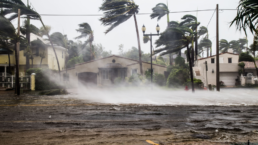
Florida’s total damage bill, the global property analyst CoreLogic now estimates, could hit $70 billion. The good news? Without the federal program that discourages development in Florida’s flood-prone inland area south of Tampa, CoreLogic’s Tom Larsen points out, Hurricane Ian’s toll would be running far higher.
Florida’s coasts — by far the state’s most vulnerable real estate — have no comparable federal protection. On these coasts, Florida’s state government calls the shots. Actually, we need to get a bit more precise here. Florida’s state government doesn’t call the shots. Florida’s rich do, and the continuing immensity of their after-tax incomes has turned out to matter far more to state policy than the well-being of Floridian families of modest means.
How so? Let’s start with CoreLogic’s analysis of Hurricane Ian’s damage. The “key reason” why Hurricane Ian has been “so economically destructive,” notes CoreLogic’s Larsen, has been Florida’s “massive growth in coastal real estate.” That coastal growth has accounted for a disproportionate share of Florida’s 50-percent population jump since 1992, the year “when Hurricane Andrew hit Miami.”
Recent Posts
Rights, Faith Groups Urge Congress to Block $2.8B Bomb Sale to Israel
Take Action Now If the Trump administration moves forward with the transfer, dozens of groups are urging lawmakers to seek a joint resolution of…
Trump’s Finger Gets Closer to Nuclear Button
Take Action Now Not that Congress caresBy Ken Klippenstein, Substack The Pentagon is “increasing [nuclear] options available to the President for…

Impeachment Calls Grow as Dems Say Up to $20 Million in Taxpayer Funds Were Used for ‘Illegal’ Pro-Trump Ads
Take Action Now “We should not have to remind you that using government funding to create or air political ads like the ones that have been running…
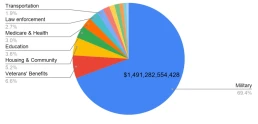
FACT SHEET: Trump’s Proposed $1.5 Trillion War Budget in Three Charts
Take Action Now Trump’s Pentagon hike would send war spending to nearly 70 percent of discretionary funds. Most would benefit weapons…