
In recent years, with the decline of popular pressure against nuclear weapons, the prospect of nuclear annihilation has revived.
by Lawrence S. Wittner, LA Progressive
This September is the 60th anniversary of U.S. and Soviet ratification of the world’s first significant nuclear arms control agreement, the Partial Test Ban Treaty. Thus, it’s an appropriate time to examine that treaty, as well as to consider what might be done to end the danger of nuclear annihilation.
Although the use, in 1945, of atomic bombs to destroy Hiroshima and Nagasaki unleashed a wave of public concern about human survival in the nuclear age, it declined with the emergence of the Cold War. But another, even larger wave developed during the 1950s and early 1960s as the nuclear arms race surged forward. At the time, the governments of the United States, the Soviet Union, and Britain engaged in testing a new nuclear device, the H-bomb, with a thousand times the power of the atomic bomb.
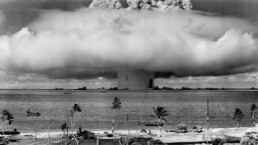
Many people found this situation alarming. Not only did the advent of H-bombs point toward universal doom in a future war, but the testing of the weapons sent vast clouds of radioactive “fallout” into the atmosphere, where it drifted around the planet until it descended upon the populace below. In 1957, Professor Linus Pauling, a Nobel Prize winner in chemistry, predicted that, thanks to the nuclear tests already conducted, a million people would die early, and 200,000 children would be born with serious mental deficiency or physical defects.
Recent Posts

In ‘Victory for Voters,’ Supreme Court Rejects Trump-GOP Attack on Mailed Ballots
Take Action Now “At a time when the Roberts Court has too often made it harder for Americans to exercise their rights, today’s decision is an…

Billionaire Wealth Tax Headed to the California Ballot
Take Action Now Gov. Gavin Newsom, who opposes the tax, tried to intimidate proponents into pulling the measure. It didn’t work.By David Dayen,…

The World Cup is undressing the myth of Trump’s American homogeneity
Take Action Now The 2026 World Cup has become a rebuke to Trump’s homogeneous vision of America, revealing a tournament – and a US team – shaped by…

The Fight Against AI Data Centers Is the Newest Frontier of Global Class Warfare
Take Action Now AI is deepening worldwide webs of accumulation, ushering in new class and power relations.By William I. Robinson, Truthout The…