
The Trump administration’s attempt to control Latin America and intimidate its leaders and citizens is, of course, nothing new.
By William D. Hartung, Tom Dispatch
The Trump administration’s exercise in armed regime change in Venezuela should have come as no surprise. The U.S. naval buildup in the Caribbean and the attacks on defenseless boats off the Venezuelan coast — based on unproven allegations that they contained drug traffickers — had been underway for more than three months. By the end of December 2025, in fact, such strikes on boats near Venezuela (and in the Eastern Pacific) had already killed 115 people.
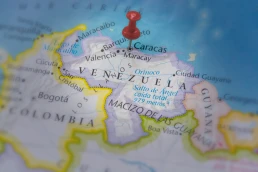
And those attacks were just the beginning. The U.S. has since intercepted oil tankers as far away as the North Atlantic Ocean, run a covert operation inside Venezuela, and earlier this month, launched multiple air strikes that killed at least 40 Venezuelans while capturing that country’s president, Nicholas Maduro, and his wife.
Both of them are now imprisoned in New York City and poised to face a criminal trial for narco-terrorism and cocaine importing conspiracies, plus assorted weapons charges. Even more strikingly, President Donald Trump recently told the New York Times that the U.S. could run Venezuela “for years.” On how that would be done, he (of course!) didn’t offer a clue. Naturally, a Venezuelan government forged in the face of a possible U.S. occupation would comply with the whims of the Trump administration — assuming that such a government, capable of stabilizing the country and earning the loyalty of the majority of its people, can even be pulled together.
Trump’s rush to war in Latin America is a phenomenon that, until recently, seemed long over. Its revival should raise multiple red flags, given the history of Washington’s failed efforts to install allied governments through regime change. (Can you spell Iraq?) In fact, given this country’s lack of success with such attempts since the Soviet Union collapsed in 1991, it’s a good bet that regime change in Venezuela will not end well for any of the parties concerned, whether the Trump administration, the new leaders of Venezuela, or the people of our two countries.
In the meantime, Trump has already suggested that he might entertain the idea of launching military strikes on neighboring Colombia. After a White House phone call between that country’s president Gustavo Petro and him, however, Time Magazine speculated that, when it comes to “who’s next?,” it might not be Colombia but Cuba, Mexico, Greenland, or even Iran. What’s not yet clear is whether Trump and crew will use the U.S. military, CIA-style covert action, economic warfare, or some combination of all of them in pursuit of their goals (whatever they might prove to be).
The one thing that should be clear by now is that pursuing such global regime-change campaigns would be sheer madness. Going that route would sow chaos and instability, while harming untold numbers of innocent civilians, all in pursuit of a futile quest for renewed U.S. global supremacy.
Recent Posts
Hegseth Prays for “Overwhelming Violence” in Iran in the “Name of Jesus Christ”
Take Action Now The secretary of defense has previously said that the US is fighting Muslim “religious fanatics” in the Iran war.By Sharon Zhang…
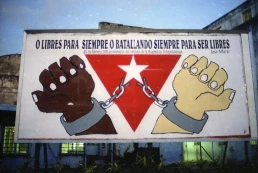
What I Saw in Cuba Was Resilience
Take Action Now I was there as part of an international solidarity convoy; over 500 representatives from more than 30 countries, united by a simple…

It’s Time For Democrats To Face Political Reality on Israel
Take Action Now At its April meeting, the Democratic National Committee must have an open debate on its support of IsraelBy Norman Solomon, Salon…
Critics Slam Meeks, Jeffries Pushing Off War Powers Bill Just as It Gets Enough Votes to Pass
Take Action Now “Each day we delay increases the risk of deeper US involvement and more lives lost,” said one progressive policy adviser. “Failing to…