
Critical historians like William Appleman Williams played a key role in highlighting the US’s imperial record in Latin America. Now Donald Trump has cut out the middleman, bluntly stating the US’s imperialist agenda.
By Richard Drake, Jacobin
On December 17, Donald Trump spoke to reporters with refreshing candor, for a US president, about the motives behind his bellicose policy in Venezuela. Referring to the ousting of US oil companies dating from 1976, he bluntly declared, “[We wanted] all of the oil, land, and other assets that they previously stole from us.” Venezuela’s resources had not belonged to its people at all but to the United States. Trump was now simply taking back what had rightfully belonged to us. This was the policy that fueled his bombing attacks across Venezuela — and this weekend’s kidnapping of President Nicolás Maduro.
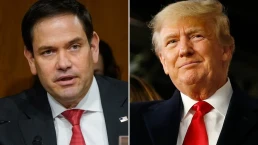
As rationales for US foreign policy in Latin America go, President Trump’s statement about Venezuela fell well short of the moralizing standard that the peoples south of the border have come to expect from us. Washington’s goals in Latin America have usually come packaged in propaganda about our intentions to be a good neighbor or a partner in hemispheric prosperity. These traditional marketing strategies, however, generally have not produced the desired results on public opinion in Latin America. The problem all along with the US language of philanthropic uplift has been the Monroe Doctrine.
Hiram Bingham III, a pioneering professor of Latin American history at Yale University credited with drawing international attention to the Incan city of Machu Picchu, succinctly explained our Monroe Doctrine problem. His illuminating article, “The Monroe Doctrine: An Obsolete Shibboleth,” appeared in the June 1913 issue of the Atlantic Monthly.
He described this document as the country’s most universally accepted foreign policy — and conceded that it was conceived with at least some good intentions in 1823 by US leaders seeking to protect the hemisphere from the further encroachments of European imperialism. And yet even then, people in Latin America saw the document as “a display of insolence and conceit on our part.”
Recent Posts
Trump Slaps Harvard With Brand New Lawsuit as War on School Escalates
Take Action Now Donald Trump continues to go after the university after it refused to bend to his demands.By Finn Hartnett, The New Republic The…

Iran Hits Major Energy Production Units in the Persian Gulf in Retaliation to U.S.-Israel Strikes on Its South Pars Gas Field
Take Action Now Several Arab countries, along with Turkey, Pakistan, and Azerbaijan, issued a joint statement on Thursday asking Iran to halt its…
Illinois Democratic Nominee Says She Wouldn’t Support Schumer as Senate Leader
Take Action Now Stratton said voters are “fed up” with “business as usual and the status quo.”By Alexander Bolton, The Hill Illinois Lt. Gov.…
Most Impeachable Person in U.S. History
Take Action Now In 2026, Trump’s 2.0 impeachable offenses include his use of the paramilitary force ICE against the U.S. public; his blowing up…