
The administration gutted guardrails and offices meant to rein in abusive actions. Some families say they have no idea where their loved ones were jailed after immigration raids.
By J. David McSwane and Hannah Allam, ProPublica
When Immigration and Customs Enforcement officers stormed through Santa Ana, California, in June, panicked calls flooded into the city’s emergency response system.
Recordings of those calls, obtained by ProPublica, captured some of the terror residents felt as they watched masked men ambush people and force them into unmarked cars. In some cases, the men wore plain clothes and refused to identify themselves. There was no way to confirm whether they were immigration agents or imposters. In six of the calls to Santa Ana police, residents described what they were seeing as kidnappings.
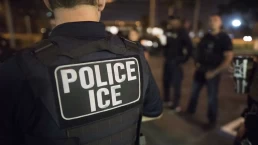
“He’s bleeding,” one caller said about a person he saw yanked from a car wash lot and beaten. “They dumped him into a white van. It doesn’t say ICE.”
One woman’s voice shook as she asked, “What kind of police go around without license plates?”
And then this from another: “Should we just run from them?”
During a tense public meeting days later, Mayor Valerie Amezcua and the City Council asked their police chief whether there was anything they could do to rein in the federal agents — even if only to ban the use of masks. The answer was a resounding no. Plus, filing complaints with the Department of Homeland Security was likely to go nowhere because the office that once handled them had been dismantled. There was little chance of holding individual agents accountable for alleged abuses because, among other hurdles, there was no way to reliably learn their identities.
Recent Posts

While Distancing From AIPAC, Most 2028 Democratic Hopefuls Are Still Embracing Israel
Take Action Now In sharp contrast to confronting the immorality of arming Israel’s genocidal policies, simply promising not to take AIPAC money is…
The Next Coup Attempt … And How to Stop It
Take Action Now It is up to us to put two and two together: Trump will seek to exploit the war (or the next one) to alter the elections. We bear…

‘A Moral Obscenity’: Trump Budget Pairs Record Military Boost With Billions in Cuts to Social Programs
Take Action Now “To pay for his endless wars, he wants the biggest increase to military spending in 70 years,” said Rep. Greg Casar. “Hell no.”By…

Meet Leqaa Kordia: Palestinian Protester Freed After a Year in ”ICE Dungeon”
Take Action Now While in custody, Kordia experienced destitute conditions at the Prairieland Detention Center, including overcrowding, inedible food,…