The memos reported for each government Monday include positions completely mutually incompatible.
By Anatol Lieven, Resonsible Statecraft
The memos presented by Ukraine and Russia at their direct talks in Istanbul on Monday make it absolutely clear that, absent a strong U.S. intervention based on a detailed U.S. peace plan, there will be no peace settlement in Ukraine.
It is not just that several of the positions on both sides are completely mutually incompatible; they suggest that at present neither side is in fact interested in an early peace.
The Ukrainian memo, presented before the talks, sets a “full and unconditional ceasefire in the sky, on land and at sea as a necessary background and prerequisite for peace negotiations.” Russia has already rejected this and will continue to do so — naturally, because it would mean giving up its main point of leverage for nothing in return. Nor indeed is a fragile and unstable ceasefire in the interests of Ukraine or the West. If Ukraine is to begin the extremely challenging process of economic reconstruction and democratic reform, it needs a stable and permanent peace.
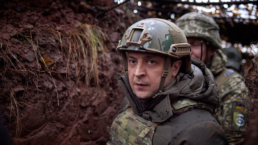
The Ukrainian memo also states that “no restrictions may be imposed on the number, deployment, or other parameters of the Armed Forces of Ukraine, as well as on the deployment of troops of friendly foreign states on the territory of Ukraine.” Russia has already stated that it will not under any circumstances accept the presence of Western troops in Ukraine since it sees this as NATO membership in all but name. European leaders have also stated that a European force could only be deployed with a U.S. guarantee of support, a condition which the Trump administration has rejected.
The Ukrainian memo continues, “some sanctions may be lifted from Russia, but in stages and only gradually, with a mechanism for resuming sanctions if necessary (snapback). Frozen Russian sovereign assets are used for reconstruction or remain frozen until reparations are paid.” Moscow will obviously not agree to a final peace without the lifting of sanctions or firm assurances that they will be lifted.
On one key point, the Ukrainian memo does leave room for compromise: “Ukraine is not forced to be neutral. It can choose to be part of the Euro-Atlantic community and move towards EU membership. Ukraine’s membership in NATO depends on consensus within the Alliance.” Russia has in fact already publicly stated that Ukraine has the sovereign right to seek EU membership. And on NATO membership, the memo is correct that this does not depend on Ukraine but on unanimous agreement (not merely “consensus”) among existing members.
Recent Posts
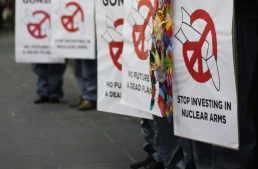
AI Doesn’t Need ‘Superintelligence’ or Evil Intent to Start a Nuclear War
Take Action Now Neither extraordinary machine intelligence nor malicious intent is required for catastrophe to result.By Paul Slovic and Herbert…
30 Months After Uproar Over Jonathan Glazer’s Oscar Speech, What Do His Pro-Israel Denouncers Say Now?
Take Action Now Given all that has happened, I recently contacted some signers of the open letter to ask whether they still fully believe in its…

Midterms Have Revived Universal Healthcare Debate. These States Are Ahead of Everyone.
Take Action Now States have often served as laboratories to test health policies later implemented nationally.By Markian Hawryluk, KFF Health……
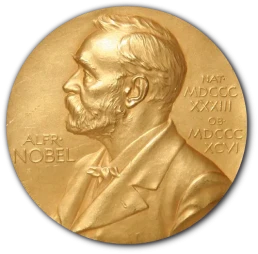
Nobel Peace Prize Turns Toward Peace in 2026
Take Action Now To have finally acknowledged someone whose work in any way addressed the horrors of Zionism is an encouraging sign from the Nobel…