
In seas that could kill a person within an hour, it took nearly two days for a rescue plane to arrive.
By Tomi McCluskey and Nick Turse, The Intercept
The conditions were treacherous in the Pacific Ocean, hundreds of miles off the Mexico–Guatemala border. There were gale-force winds and 9-foot seas. It would be dangerous if you were on a boat, nevermind if yours was blown out of the water.
Eight men leapt into those rough seas on December 30 when the U.S. rained down a barrage of munitions, sinking three vessels. They required immediate rescue; chances were slim that they could survive even an hour. In announcing its strike, U.S. Southern Command or SOUTHCOM, said it “immediately notified” the Coast Guard to launch search and rescue protocols to save the men.
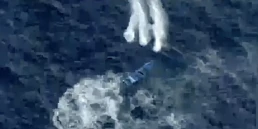
But it took the United States Coast Guard almost 45 hours to begin searching the attack zone for survivors, new reporting by Airwars and The Intercept reveals.
Help did not arrive in time. A total of 11 civilians died due to the U.S. attack on December 30 — including the eight who jumped overboard, according to information provided exclusively to The Intercept by SOUTHCOM, which is responsible for U.S. military operations in and around Latin America and the Caribbean. This represents one of the largest single-day death tolls since the U.S. military began targeting alleged drug smuggling boats last September.
Using open-source flight tracking data, Airwars and The Intercept learned that a Coast Guard plane did not head toward the site of the attack for almost two days. A timeline provided by the Coast Guard confirmed that it was roughly 45 hours before a flight arrived at the search area.
The slow response and lack of rescue craft in the area suggests there was scant interest on the part of the U.S. in saving anyone. It’s part of a pattern of what appear to be imitation rescue missions that since mid-October have not saved a single survivor.
Recent Posts

The Quiet Way Trump Has Made Life Easier For Polluters
Take Action Now It’s not just about environmental rollbacks: Trump and Lee Zeldin have presided over a striking decline in the EPA enforcing existing…
Coalition Demands Schumer, Jeffries Step Down Over Failure to Fight ‘War-Crazed’ Trump
Take Action Now “Schumer and Jeffries have shown that they cannot be trusted to prevent more wars, more threats of wars, or the transfer of another…
Coalition of Antiwar Groups Launches National Campaign Calling for Jeffries and Schumer to Step Aside from Leadership
Take Action Now “Schumer and Jeffries have failed their party and country through wobbly leadership when firmness and clarity are needed in opposing…
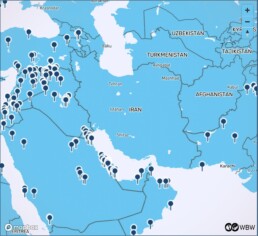
The Bases Basis for the Iran War
Take Action Now The economic impact of this war — through oil, tourism, and otherwise — is likely to continue to rub Gulf nations’ faces in the…