
Relief from devastating sanctions is a key provision for Iran in the ceasefire negotiations.
By Sharon Zhang, TruthOut
The U.S. Treasury Department announced that it is expanding its sanctions regime, known as “Economic Fury,” against Iran on Tuesday, escalating the administration’s economic warfare against the country just hours before President Donald Trump announced an extension of the ceasefire in Iran.
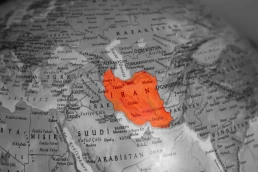
The administration said it is sanctioning 14 individuals and entities that it claims are involved in Iran’s weapon procurement, and that the sanctions are being done in support of Operation Epic Fury and Trump’s vow to exert “maximum pressure” on the Iranian government.
“The Iranian regime must be held accountable for its extortion of global energy markets and indiscriminate targeting of civilians with missiles and drones,” said Treasury Secretary Scott Bessent in a statement. “Under President Trump’s leadership, as part of Economic Fury, Treasury will continue to follow the money and target the Iranian regime’s recklessness and those who enable it.”
The intensification of the U.S.’s sanctions regime on Iran — which has, for decades, devastated Iran’s economy — escalates the potential economic and military costs to Iran despite the ongoing ceasefire.
As part of ceasefire negotiations, Iran has demanded that the U.S. lift all primary and secondary sanctions on the country, a provision that was included in the Iran nuclear deal that Trump exited during his first term. Analysts have said that, on top of the devastating effects of the sanctions, millions of Iranians have been pushed into poverty due to physical and economic damages caused by the war.
Trita Parsi, executive vice president of the Quincy Institute, pointed out that any lifting of sanctions on Iran would “trigger the biggest fight Trump has yet had with the Israelis,” and has said that this provision will be the key sticking point in any negotiations to further extend the ceasefire.
“The Israelis have opposed every other deal the United States has contemplated with Iran that entails sanctions lifting,” said Parsi in an appearance on ABC. “Without sanctions lifting, there is no deal.”
Iran’s envoy to the UN said earlier this month that the war has caused $270 billion in economic damage and has also demanded compensation.
The U.S. is also causing economic pain to Iran due to Trump’s naval blockade on Iranian ports that commenced last week, despite the ceasefire. This includes the interception of an Iranian-flagged ship over the weekend, Trump said. Iran has maintained its closure of the Strait of Hormuz, but it was done at first in response to Israel’s continued attacks on Lebanon, which Iranian and Pakistani officials said was included in the ceasefire agreement, and now in response to the U.S.’s blockade.
Iranian officials have condemned the blockade as another form of warfare. The U.S. claims that it has blocked the passage of 29 ships in relation to the blockade, though some reports have said that some Iranian tankers have bypassed it.
“Blockading Iranian ports is an act of war and thus a violation of the ceasefire. Striking a commercial vessel and taking its crew hostage is an even greater violation,” said Iranian Foreign Minister Abbas Araghchi.
Iran’s president, Masoud Pezeshkian, said that the blockade and other threats are obstructing progress on ceasefire negotiations.
“The Islamic Republic of Iran has welcomed dialogue and agreement and continues to do so. Breach of commitments, blockade and threats are main obstacles to genuine negotiations,” said Pezeshkian in a post on X. The “World sees your endless hypocritical rhetoric and contradiction between claims and actions.”
Recent Posts
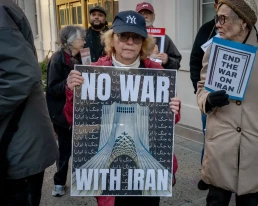
‘Stop The War on Iran’: Brooklyn Peace Activists Urge Jeffries to Help End Conflict
Take Action Now Democrats have a golden opportunity to capitalize on this issue, win big in November, and take real action on AI data centers to…

A Blue Wave Won’t Wash Away Our Oligarchy Problem
Take Action Now The massive election spending by Elon Musk and other billionaires is a huge problem, even if many of the superwealthy’s favorites…

Democrats Should Get Behind a National AI Data Center Moratorium
Take Action Now Democrats have a golden opportunity to capitalize on this issue, win big in November, and take real action on AI data centers to…

Another Way Out: Public Execution Is an Everyday Reality—Livestreamed or Not
Take Action Now For some, the Trump administration’s plan to livestream an execution was unacceptable because it wouldn’t happen behind closed doors……