
The detention and threatened deportation of Mahmoud Khalil stands in a long tradition of the US government using border policy as a tool for political control, stretching back to First and Second Red Scare efforts to crack down on left-wing dissent.
By Kim Phillips-Fein, Jacobin
The recent detention of Palestinian activist Mahmoud Khalil, a recent graduate of Columbia University’s School of International and Public Affairs, is troubling for many reasons. Khalil, a green card holder, has not been charged with any crime. The case against him seems to rest entirely on his political speech criticizing Israel. His arrest followed a week during which people targeted him intensely online, calling for deportation, suggesting a world in which the political wishes of right-wing extremists are translated into state policy. His rapid removal to Louisiana, far from his lawyers, his friends, and his eight-month-pregnant wife, reeks of disappearances of student radicals in authoritarian nations throughout history.
But for all that is truly novel about his situation, Khalil’s case is also a reminder of the long US history of deportation and border control as a strategy to punish political radicals and quell dissent. The most famous episode of mass deportation as a tool of political repression came during the Red Scare of 1919 to 1920. During the period of intense social upheaval that followed World War I, general strikes swept cities like Seattle, and the specter of the Bolshevik Revolution haunted American politics. In the spring of 1919, an anarchist faction sent bombs in the mail to the homes of important political figures, including that of Attorney General A. Mitchell Palmer.

While flyers distributed with the bombs were traced to a print shop operated by the followers of one radical thinker known for advocating violence, there was never enough evidence against any individual to mount a criminal case. Instead, in late 1919 and early 1920, Palmer ordered a series of raids of political meetings of radical organizations. Thousands of people were arrested and detained, some with warrants and some without, and more than 550 were ultimately deported.
Palmer insisted that these deportations were necessary to protect the American population. His argument was that the social unrest in the country, far from being a response to unemployment, inflation, or racism, was being stirred up by a network of “criminal aliens,” almost exclusively from Russia and Germany, who had “infected our social ideas with the disease of their own minds and unclean morals.” Because the government was charged with fighting crime, it could legitimately round up these actors and expel them from the nation — even if as individuals they were not linked to any acts of violence.
Although the raids were widely condemned, they had a profound impact. The argument that immigrants brought dangerous politics and radical violence to the United States helped prompt Congress to pass the Johnson-Reed Act in 1924, sharply curtailing immigration from Southern and Eastern Europe.
Recent Posts

Israeli Mob Beats Washington Post Journalist, Burns Olive Trees In West Bank
Take Action Now “They just kept kicking me and kicking me,” photojournalist Heidi Levine recalled from a hospital bed after the attack.By Ryan…
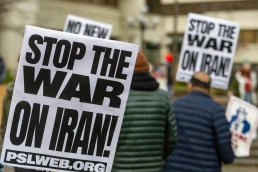
Take Action October 20 to End the Illegal U.S.-Israeli War on Iran, #PeaceWithIranNOW
Take Action Now The war is not just illegal, but massively unpopular with the U.S. public, and Trump and his Republican enablers may take a deserved…
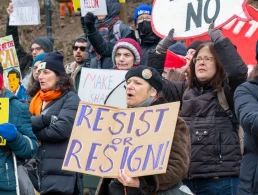
Chuck Schumer Hasn’t Said a Word About Trump’s Attempt to Deport Ilhan Omar
Take Action Now Ethics lawyers say the raid violated the Hatch Act. Schumer has been silent.By Sharon Zhang , Truthout Days after the Trump…
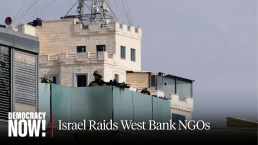
“Propaganda Show”: IDF Raids Palestinian NGOs in the West Bank Ahead of Israeli Elections
Take Action Now “The raid onto the city center Ramallah is not a lonely activity. It happens every day that they raid different villages,…