
Journalist Abubaker Abed never wanted to leave his homeland. He describes the excruciating decisions he was forced to make.
By Abubaker Abed, Drop Site
The night before I traveled it was bleak and cold. I didn’t sleep. Explosions and bombs lit up the dark sky. Apache helicopters hovered low nearby and opened continuous fire. My mother was asleep beside me, staying as close as possible after I begrudgingly decided to leave Gaza for the first time in my life. Before coming to a decision, I had long and painful discussions with her and other family members and friends.
It was an impossible choice, the most difficult one I have ever had to make—to leave home at the height of the genocide. It was April 15th. I was to travel the next morning.
I was totally against leaving until my mother told me, “If you stay, you’ll harm your family because they will bomb you with us and your brothers will be hurt. You should leave.” I never imagined hearing such words from my mother. I was devastated and broke down into tears. The thought that I would pose a danger to my family filled me with the deepest sorrow, pain, and no small degree of remorse. It was the most difficult moment of my life.
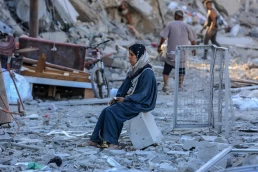
I had been forced to make this decision, and it felt completely wrong. My heart raced and throbbed with pain. The night slipped into a kind of void. I kept track of every hour, every minute, every second. I was aware these might be my final moments in Gaza, ever. As the morning light first began to lift the darkness, and the dawn call to prayer rang out, two enormous explosions echoed across the room. It was as though everything froze. My mind could not comprehend what was going on.
I took a shower and packed. This was not difficult, because we were only allowed to take one small bag containing little more than a single change of clothes, a toothbrush, a mobile phone, and a charging cable. Those were the conditions set by Israel. I then performed my morning Fajr prayers. I had never left Gaza before, and it felt unsettling, surreal. I was behaving mechanically, almost like a robot.
My mother’s eyes welled with tears and she began to weep. I told her I wouldn’t get on the bus if she kept crying. “I am leaving upon your demand,” I said. Choking with anguish, I whispered in her ear, “Please let it be a great moment, not a sad one, and believe that we will meet soon, inshallah.”
Recent Posts
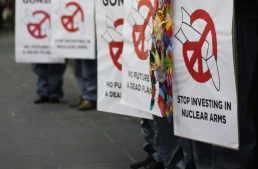
AI Doesn’t Need ‘Superintelligence’ or Evil Intent to Start a Nuclear War
Take Action Now Neither extraordinary machine intelligence nor malicious intent is required for catastrophe to result.By Paul Slovic and Herbert…
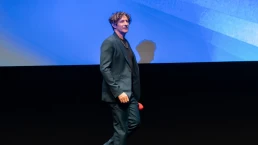
30 Months After Uproar Over Jonathan Glazer’s Oscar Speech, What Do His Pro-Israel Denouncers Say Now?
Take Action Now Given all that has happened, I recently contacted some signers of the open letter to ask whether they still fully believe in its…

Midterms Have Revived Universal Healthcare Debate. These States Are Ahead of Everyone.
Take Action Now States have often served as laboratories to test health policies later implemented nationally.By Markian Hawryluk, KFF Health……

Nobel Peace Prize Turns Toward Peace in 2026
Take Action Now To have finally acknowledged someone whose work in any way addressed the horrors of Zionism is an encouraging sign from the Nobel…