COVID shows it’s time to end the pharmaceutical industry.
By Rob Wallace, Truthout
Eighty-four million Americans remain unvaccinated against COVID-19. Nearly no one has knocked on their doors to explain why a vaccine is a good idea. Even at this late date, now is a good time to start.
As with COVID testing, thousands of newly hired community health workers are needed to hit the streets and back roads to convince people that vaccines are safe and necessary. Daily conversations, some over the course of many weeks, are needed to turn millions of skeptics or the disconnected into participants. This would be the kind of program the Biden administration proposed, if still in an inadequate form, for contact tracing before the inauguration and never pursued after.
Certainly, the ongoing bloodbath — only inches deep but wide as a lake — isn’t just a matter of the present administration. Trump’s vindictive inaction helped kill half a million Americans the first year of the outbreak. Biden’s smug insufficiency, however, will likely add another half a million by spring. But more pointedly, it’s as much a matter of the U.S.’s structural decline that produced the holes in our public health coverage. Beginning nearly 50 years ago, public health was increasingly abandoned or monetized under the neoliberal program.

Public health spending clearly saves lives. Ten years ago, health policy analysts Glen Mays and Sharla Smith found that U.S. mortality rates from preventable deaths — including infant mortality and cardiovascular disease, diabetes and cancer — fell between 1.1 to 6.9 percent for every 10 percent increase in local public health spending.
Yet this crucial spending has dropped. In 2018, the Trust for America’s Health reported on the effective decline of public health funding.
The report described the Public Health Emergency Preparedness (PHEP) Cooperative Agreement Program as the only federal program that supports state and local health departments to prepare for and respond to emergencies. Except for one-time bumps for the Ebola and Zika outbreaks, core emergency preparedness funding had been cut by more than one-third (from $940 million in 2002 to $667 million in 2017).
Recent Posts
Trump’s Finger Gets Closer to Nuclear Button
Take Action Now Not that Congress caresBy Ken Klippenstein, Substack The Pentagon is “increasing [nuclear] options available to the President for…

Impeachment Calls Grow as Dems Say Up to $20 Million in Taxpayer Funds Were Used for ‘Illegal’ Pro-Trump Ads
Take Action Now “We should not have to remind you that using government funding to create or air political ads like the ones that have been running…
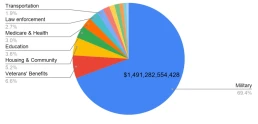
FACT SHEET: Trump’s Proposed $1.5 Trillion War Budget in Three Charts
Take Action Now Trump’s Pentagon hike would send war spending to nearly 70 percent of discretionary funds. Most would benefit weapons…

Israeli Settlers Killed His Constituent. Fetterman Is Sole Democrat Against Investigating Them.
Take Action Now Despite support from other Democrats, the Senate voted 51–47 against a resolution to force U.S. probes on killings of Americans in…