
Amid rising geopolitical tensions, the U.S. is expanding its military presence in Greenland, increasing the risk of something going very wrong.
by Adam Federman, In These Times
In the spring of 1953, when Regina Kristiansen was 14, she and her family were forced to leave their village of Uummannaq in northwestern Greenland, hundreds of miles above the Arctic Circle. At the behest of Danish authorities, who promised them new homes, they were given just a few days to gather their belongings. Kristiansen drove a dogsled across the ice for two days before reaching a barren island in Baffin Bay. Along with seven other families, they lived in makeshift tents for months as storms lashed the shore and winter approached. One woman gave birth in the tents. Another, a village elder, died before Denmark finished building their homes.
Altogether, 116 people from 26 families left Uummannaq, and their homes were burned to the ground. At the time, the Danish government — then a waning colonial power — characterized the move as voluntary. But in fact, the families were evicted to allow for the expansion of a U.S. Air Force base called Thule. The 233,000-acre base and deepwater port is one of the largest U.S. military installations in the world, and it played a prominent role in North American missile defense during the Cold War. It has also been a source of some of the U.S. military’s most closely held secrets.
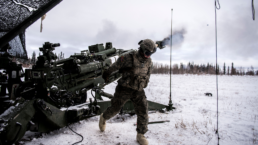
Originally built following a 1951 bilateral defense agreement with Denmark — which granted the United States broad authority to operate on the island — Thule became the staging ground for a U.S. nuclear weapons program that was kept hidden from Greenland’s people. A missile launch facility, code-named “Project Iceworm,” was built deep under the ice sheet east of Thule, and, in 1968, a B-52 bomber carrying four thermonuclear bombs crashed a few miles from what had been Uummannaq. At one point, America had 17 military installations in Greenland, reflecting the Pentagon’s long-held view of the country as the “world’s largest stationary aircraft carrier.”
Recent Posts
How Status Quo Democrats Could Create Another Trump
Take Action Now A new study suggests Democrats’ broken promises won’t just cost them elections — they could fuel an even more dangerous MAGA…
The Pentagon Asked OpenAI for Artificial Intelligence Designed to Rarely Say No
Take Action Now The U.S. military’s desire for an AI tool with “minimal refusal rates” was revealed through a FOIA lawsuit filed by The Intercept.…
Real History: After 9/11, the ‘War on Terror’ Was a War of Terror
Take Action Now Through it all, the ongoing war effort that began in autumn 2001 had an implicit throughline in dominant media and politics: while…

Abolish the Board of Peace. Try the Table of Peace.
Take Action Now I asked people to pretend to be the United States Congress for 10 seconds. (Many of them were disgusted at the thought but I assured…