In the last decade or so, 24 states have legalized cannabis for adult use. There’s a reason none have turned back.
By Paul Armentano, Otherwords
It’s been over a decade since Colorado and Washington became the first two states to legalize marijuana for adults. With the benefit of hindsight, it’s fair to ask: Has this policy been successful?
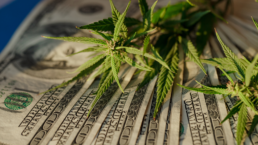
Absolutely. A policy of legalization, regulation, and education is preferable to a policy of criminalization, stigmatization, and incarceration.
Let’s be clear. Legalization didn’t create or normalize the marijuana market in the United States. The market was already here.
But under a policy of prohibition, this market flourished underground — and those involved in it remained largely unaccountable. They didn’t pay taxes, they didn’t check IDs, and they didn’t test the purity of their products. Disputes that arose in the illicit marketplace were not adjudicated in courts of law.
By contrast, under regulation, cannabis products in many states are now available from licensed manufacturers at retail stores.
Cannabis is cultivated, and products are manufactured, in accordance with good manufacturing practices. Products are lab tested and labeled accordingly. And sales are taxed, with revenues being reinvested in the community. Since 2014, retail sales of adult-use cannabis products have generated more than $15 billion in tax revenue.
Most importantly, millions of Americans — many of them young adults — are no longer being arrested for possessing a substance that is objectively safer than either tobacco or alcohol.
According to data compiled by the Federal Bureau of Investigation, the annual number of marijuana-related arrests in the United States fell from 750,000 in 2012 to 227,000 in 2022, the last year for which data is available.
In short, these state-level policy changes have resulted in countless Americans being spared criminal records — and the lost opportunities that accompany them — in the past decade.
And contrary to opponents’ fears, cannabis use by teens has not risen in parallel with legalization.
According to data provided by the Centers for Disease Control and Prevention, the percentage of high schoolers who use marijuana actually fell 30 percent over the past decade. Compliance check data from California, Colorado, Nevada, and other legal marijuana states show that licensed marijuana retailers do not sell products to underage patrons.
Also contrary to some critics’ claims, legalization states have not experienced any spike in either psychosis or mental illnesses.
According to findings published last year in the Journal of the American Medical Association, rates of psychosis-related health care claims are no higher in jurisdictions where cannabis is legal than in those where it’s not. Stanford University researchers similarly reported last year that residents of states where cannabis is legal exhibit no higher levels of psychosis than those in non-legal states.
Legalization is also successfully disrupting the illicit marketplace. According to a 2023 survey, 52 percent of consumers residing in legal states said that they primarily sourced their cannabis products from brick-and-mortar establishments. By contrast, only 6 percent of respondents said that they primarily purchased cannabis from a “dealer.”
Many consumers in non-legal states also reported that they frequently traveled to neighboring legal states to purchase cannabis products rather than buying from illicit dealers in their own state.
Twelve years into states’ marijuana legalization experiment, public support for making marijuana legal nationwide has never been higher. To date, 24 states have legalized the adult-use market.
None of these states have ever repealed their legalization laws. That’s because these policies are working largely as voters and politicians intended — and because they’re preferable to cannabis criminalization.
After a century of failed policies and “canna-bigotry,” the verdict is in. Legalization is a success, and the end of cannabis prohibition can’t come soon enough.
Paul Armentano is the Deputy Director for NORML, the National Organization for the Reform of Marijuana Laws. This op-ed was adapted from an earlier version published at The Hill and distributed for syndication by OtherWords.org.
Recent Posts
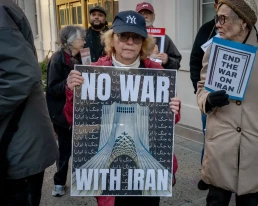
‘Stop The War on Iran’: Brooklyn Peace Activists Urge Jeffries to Help End Conflict
Take Action Now Democrats have a golden opportunity to capitalize on this issue, win big in November, and take real action on AI data centers to…

A Blue Wave Won’t Wash Away Our Oligarchy Problem
Take Action Now The massive election spending by Elon Musk and other billionaires is a huge problem, even if many of the superwealthy’s favorites…
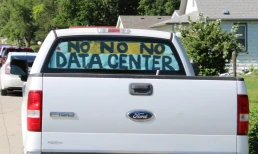
Democrats Should Get Behind a National AI Data Center Moratorium
Take Action Now Democrats have a golden opportunity to capitalize on this issue, win big in November, and take real action on AI data centers to…

Another Way Out: Public Execution Is an Everyday Reality—Livestreamed or Not
Take Action Now For some, the Trump administration’s plan to livestream an execution was unacceptable because it wouldn’t happen behind closed doors……