
Israeli attacks on Lebanon have long been linked to violence in Gaza — that’s why a ceasefire is key to resolving both conflicts.
By Khury Petersen-Smith, Foreign Policy in Focus
As of this writing, Israel’s rampage in Lebanon has killed more than a thousand people in two weeks, wounded thousands more (including many maimed for life), and displaced hundreds of thousands.
The Israeli onslaught — including the assassination of Hezbollah leader Hassan Nasrallah with a 2,000 pound, U.S.-made bomb that killed others too — has mostly garnered approval from American leaders, particularly the president and vice president.
Continuing its genocidal assault of Gaza, bombing Yemen for the second time this year, and carrying out aerial bombardment in Lebanon at a speed and on a scale perhaps unseen in the 21st century, Israel has been making plans to launch a ground invasion. As the invasions and attacks escalate and expand across the region — and Washington continues to send Israel weapons — here are six key things to know about the crisis in Lebanon and how it could be resolved.
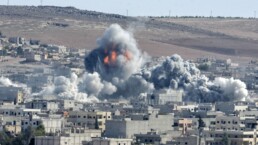
1. Israel has a long history of attacks on Lebanon.
In 1982, at the height of Lebanon’s catastrophic, 15 year civil war, Israeli forces invaded, attacking Lebanese villages and Palestinian refugee camps with tanks, airstrikes, and shells.
Israel laid siege to Beirut and collaborated with far-right Christian Lebanese militias as they carried out a notorious massacre of Palestinian refugees in Sabra and the Shatilla refugee camp, killing thousands.
It was during these years that Hezbollah formed to fight the Israeli occupation.
2. Israel occupied Lebanon for 15 years.
Israel occupied a wide strip of Southern Lebanon from 1985 until 2000.
During that time, the Israeli military propped up the South Lebanon Army (SLA) militia, which detained Lebanese and Palestinian dissidents at a notorious prison — administered under Israeli protection — where Amnesty International and other human rights organizations documented systematic torture.
Israel justified its brutal occupation by claiming it needed a “buffer zone” to protect itself — the same excuse it is using to justify its attacks in southern Lebanon today.
Recent Posts
Blanche says Trump isn’t trying to meddle with Alaska election results by suing over Senate race
Take Action Now A day after the lawsuit was filed on Thursday, Peltola called it “just flagrant, flagrant corruption in my opinion” and a diversion…

The Courage to Keep the Oath
Take Action Now Why We Must Stand with Major Jason WatsonBy Jeffrey Sterling For almost two months, an Air Force officer has been sitting alone in…
‘Act of Collective Punishment’: Netanyahu Condemned Over ‘Full Lockdown’ of Occupied West Bank
Take Action Now The reaction to a shooting incident in Hebron, said one Palestinian critic, “represents an alarming escalation in Israel’s policies…
‘Stop The War on Iran’: Brooklyn Peace Activists Urge Jeffries to Help End Conflict
Take Action Now Democrats have a golden opportunity to capitalize on this issue, win big in November, and take real action on AI data centers to…