
Reckless funding cuts have dealt a significant blow to ongoing research, derailing NIH-funded clinical trials on antivirals and immunotherapies for Long COVID, halting large-scale cohort studies that track patient outcomes, and stalling the development of new diagnostics to improve detection and classification.
By Hayley Brown, Center for Economic and Policy Research
During his confirmation hearings to serve as Secretary of Health and Human Services (HHS), Robert F. Kennedy Jr. emphatically pledged to prioritize tackling Long COVID, a debilitating chronic condition that develops after COVID-19 infections and leaves many patients with lasting symptoms, such as fatigue, brain fog, and respiratory problems. Sen. Todd Young (R-Indiana) asked Kennedy if he would commit to funding research into treatments and diagnostics for Long COVID. Kennedy’s response? “Absolutely, senator, with enthusiasm.”
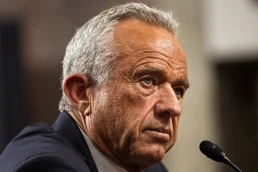
Fast forward to August 2025, and Kennedy has dismantled not only federal COVID prevention programs but also much of the research infrastructure devoted to understanding and treating Long COVID. He closed the Office of Long COVID Research and Practice, a central coordinating body established in 2023 to unify agency efforts on Long COVID, and failed to meaningfully replace it. His sweeping reorganization of HHS eliminated or consolidated key centers essential for disease surveillance and chronic illness response, including the National Center for Chronic Disease Prevention and Health Promotion. Reckless funding cuts have dealt a significant blow to ongoing research, derailing NIH-funded clinical trials on antivirals and immunotherapies for Long COVID, halting large-scale cohort studies that track patient outcomes, and stalling the development of new diagnostics to improve detection and classification.
Long COVID is a chronic, multisystem condition that follows COVID‑19 infection. It can arise regardless of the severity of the initial illness and is characterized by symptoms that may persist or emerge weeks to months after the acute phase of infection. Researchers have drawn parallels between Long COVID’s impact and that of a stroke or Parkinson’s. Long COVID also shares similarities with other post-viral syndromes such as myalgic encephalomyelitis/chronic fatigue syndrome (ME/CFS), which similarly involve long-term fatigue and autonomic dysfunction. Studies have shown that both Long COVID and ME/CFS can lead to quality-of-life impairments that outstrip many advanced cancers.
Recent Posts

“Abolish ICE”: Protests Erupt in NYC After ICE Agents Shoot Father With 5-Year-Old Son in Car
Take Action Now “Candidates should seek support from the AI industry at their own peril.”By Amy Goodman, Darializa Avila Chevalier, and Carmen De…

Voters in Key States See AI Campaign Cash as More Politically Toxic Than AIPAC: Poll
Take Action Now “Candidates should seek support from the AI industry at their own peril.”By Jake Johnson, Common Dreams Polling data released…
Everything You’ve Been Told About Lethal Injection Is a Lie
Take Action Now Death by drugs is brutal—and designed for political optics. Christa Pike’s failed execution pulled back the curtain.By Arianna…

British Support For Israel Is Shattering
Take Action Now There is not a single member of the Foreign and Commonwealth Office who believes that Israel, under any leadership, would allow a…