
By Michael T. Klare, The Nation
In recent weeks, the airwaves have been full of inflammatory rhetoric over Taiwan, increasing the risk that tensions over the island’s status could provide the spark for a military conflict, even a catastrophic war, between the United States and China. On October 10, President Xi Jinping of China called on the Taiwanese to merge with the mainland in a peaceful fashion, but warned of unspecified dangers if they chose otherwise. “Those who forget their ancestors, betray the motherland, or split the country are doomed,” he said of Taiwanese “separatists.” A day later, President Tsai Ing-wen of Taiwan avowed that her country must “resist annexation or encroachment upon our sovereignty,” and would negotiate with Beijing only “on the basis of parity”—a stance wholly unacceptable to the Chinese leadership. On this side of the Pacific, politicians from both parties were quick to condemn Xi’s foreboding threats and to offer support for Tsai’s uncompromising posture. Many Republicans demanded an ironclad US commitment to defend Taiwan in the event it was attacked by China, and President Biden, when asked by Anderson Cooper of CNN whether the United States would defend Taiwan under those circumstances, said, “Yes, we have a commitment to do that.”
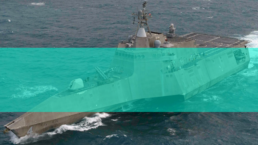
Biden’s handlers at the White House were quick to walk back his statement, noting that under the Taiwan Relations Act of 1980—the governing legislation in this field—the United States would consider any attempt to alter the island’s status by military force a matter “of grave concern,” but not one that would automatically trigger US military intervention. White House officials have insisted that US policy has “not changed” in this regard—saying that, while Washington is prepared to aid Taiwan through arms transfers and other such measures, it has no legal obligation to defend the island. For many in Congress, however, this is insufficient: Members of both parties are championing the “Taiwan Invasion Prevention Act,” under which the president would be pre-delegated the authority to employ force against China if it attacked the island, without requiring further approval from Congress.
Recent Posts
Postpone the AI Public Offerings Until Congress Acts
Take Action Now A company should not disclose a risk of catastrophe to humanity and then sell its shares to the public before any public authority…
Congress Has The Power to Fix the Trump-Saudi Nuclear Deal
Take Action Now Congress has at least 9 months and considerable leverage to make things right.By Alan J. Kuperman, Bulletin of the Atomic…
AI Doesn’t Need ‘Superintelligence’ or Evil Intent to Start a Nuclear War
Take Action Now Neither extraordinary machine intelligence nor malicious intent is required for catastrophe to result.By Paul Slovic and Herbert…

30 Months After Uproar Over Jonathan Glazer’s Oscar Speech, What Do His Pro-Israel Denouncers Say Now?
Take Action Now Given all that has happened, I recently contacted some signers of the open letter to ask whether they still fully believe in its…