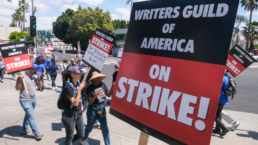
If you work for a living in this increasingly unfair economy — or just watch TV — you have a stake in the Hollywood writers strike.
By Farrah Hassen, Otherwords
Every television series or film begins and ends with writers. They pen the iconic lines that actors deliver, like “Just one more thing,” “There’s no crying in baseball!,” and “Rosebud.”
Good stories, like good lines, can last for generations. But for the writers who create them, just making it to the next paycheck has become a struggle.
Writers are facing an existential crisis. According to the Writers Guild of America (WGA), the median weekly pay for writers declined 23 percent over the last decade after adjusting for inflation.
With the rise of streaming, the big studios are having no trouble maximizing their profits. But streaming productions tend to pay less than traditional film and TV, and with less stable employment due to shorter seasons. Streaming has also taken a huge chunk of revenue writers could once count on from broadcast TV reruns.
That’s the context behind this spring’s WGA strike. With 11,500 writers walking out, it’s Hollywood’s first strike in 15 years. If the studios won’t make a fair offer, your favorite shows could be in trouble — but that’s not the only reason this strike matters.
The WGA members demand increases in minimum pay, residuals for streaming, and health and pension improvements from the most profitable companies in the entertainment industry — including Disney, Netflix, Apple, Amazon, NBC Universal, Paramount, Discovery-Warner, and Sony.
The union calculates that its proposals would provide writers with an additional $429 million a year. The studios, represented by the Alliance of Motion Picture and Television Producers (AMPTP), have counter-offered around $86 million and called it a “generous increase.” The two sides aren’t even remotely close to meeting in the middle.
Moreover, reminiscent of a dystopian Black Mirror episode, the studios have refused to guarantee that AI will not be used to replace human writers, which is another key WGA contract demand. Netflix has already experimented with replacing artists with AI.
The writers strike is only the latest chapter of an ongoing struggle for worker rights in today’s “gig economy.”
For years now, Big Tech corporations have been rebranding workers as independent contractors or “gig workers” in order to deny them rights and benefits. These workers, whether drivers for Uber or warehouse employees for Amazon, are made easily replaceable — if not by someone else, then perhaps by AI
With major tech companies like Netflix, Apple, and Amazon now at the streaming table, this trend is reverberating throughout the film industry.
In 2021, behind-the-scenes television and film workers represented by the International Alliance of Theatrical Stage Employees (IATSE) nearly went on strike because studios owned by the likes of Amazon and Netflix were contributing less to worker benefits and requiring shorter turnaround times between shifts.
Whether starting a career or well-established, workers across the economy now put in longer hours for less pay without the guarantees of a sustainable career, health care, paid sick leave, or retirement. Extreme income inequality is compounding matters, with annual bonuses alone for Wall Street bankers greatly surpassing what ordinary workers take home all year.
That’s why Hollywood writers are only the latest workers to join thousands of nurses, baristas, teachers, railroad workers, and others standing up to their bosses. Solidarity across these labor struggles could help rebuild this economy for all working people.
Ultimately, this dispute is bigger than its immediate impact on television and film productions. Worker dignity and the universal right to an adequate standard of living are also at stake.
The film companies should take a cue from one of cinema’s wisest aliens. As Spock concluded in Star Trek II: The Wrath of Khan (thanks to late screenwriter Jack B. Sowards): “The needs of the many outweigh the needs of the few.”
Recent Posts
Voters in Key States See AI Campaign Cash as More Politically Toxic Than AIPAC: Poll
Take Action Now “Candidates should seek support from the AI industry at their own peril.”By Jake Johnson, Common Dreams Polling data released…
Everything You’ve Been Told About Lethal Injection Is a Lie
Take Action Now Death by drugs is brutal—and designed for political optics. Christa Pike’s failed execution pulled back the curtain.By Arianna…

British Support For Israel Is Shattering
Take Action Now There is not a single member of the Foreign and Commonwealth Office who believes that Israel, under any leadership, would allow a…
I’ve Covered Death Row Cases for Nearly a Decade. What Happened to Christa Pike Wasn’t an Anomaly.
Take Action Now Several states have faced questions about the competence of their execution teams as major medical organizations have opposed…