
Permissive airstrikes on non-military targets and the use of an artificial intelligence system have enabled the Israeli army to carry out its deadliest war on Gaza, a +972 and Local Call investigation reveals.
by Yuval Abraham, +972 Magazine
The Israeli army’s expanded authorization for bombing non-military targets, the loosening of constraints regarding expected civilian casualties, and the use of an artificial intelligence system to generate more potential targets than ever before, appear to have contributed to the destructive nature of the initial stages of Israel’s current war on the Gaza Strip, an investigation by +972 Magazine and Local Call reveals. These factors, as described by current and former Israeli intelligence members, have likely played a role in producing what has been one of the deadliest military campaigns against Palestinians since the Nakba of 1948.
The investigation by +972 and Local Call is based on conversations with seven current and former members of Israel’s intelligence community — including military intelligence and air force personnel who were involved in Israeli operations in the besieged Strip — in addition to Palestinian testimonies, data, and documentation from the Gaza Strip, and official statements by the IDF Spokesperson and other Israeli state institutions.
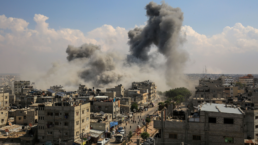
Compared to previous Israeli assaults on Gaza, the current war — which Israel has named “Operation Iron Swords,” and which began in the wake of the Hamas-led assault on southern Israel on October 7 — has seen the army significantly expand its bombing of targets that are not distinctly military in nature. These include private residences as well as public buildings, infrastructure, and high-rise blocks, which sources say the army defines as “power targets” (“matarot otzem”).
Recent Posts

Vance-Led Task Force Moves to Strip 760,000 People of ACA Coverage
Take Action Now Protect Our Care says about 8 million people have lost coverage since the start of Trump’s second termBy Ruth Milka, Nation of…

The Espionage Act Monster: How Washington Crushes Those Who Expose Its Crimes
Take Action Now As surveillance expands and the ability to communicate anonymously becomes increasingly difficult, the panel asks a fundamental…

Another U.S. Soldier Is Dead as Iran War Casualties Rise
Take Action Now An additional 66 U.S. personnel were wounded in action this month, pushing the official count of Iran war casualties above 850.By…

ICE “Disappears” Thousands Ordered to Be Deported From Detainee Locator
Take Action Now This could make it “nearly impossible” for some people to challenge their deportation orders, an attorney said.By Sharon Zhang,…