
India’s missile attack shows that managing an India-Pakistan crisis is easier said than done.
By Syed Ali Zia Jaffery, Bulletin of the Atomic Scientists
But on Tuesday, in what it code-named Operation Sindoor, India fired missiles at multiple sites in Pakistan, claiming that those sites were “terrorist infrastructure in Pakistan and Pakistan-occupied Jammu and Kashmir from where terrorist attacks against India have been planned and directed.” According to a report in The Guardian newspaper, no Pakistani military sites were targeted.
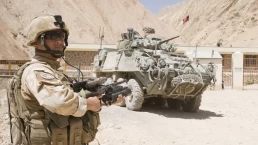
Before the missile attack, Indian Prime Minister Narendra Modi gave full operational freedom to the Indian military to avenge the Pahalgam attack, which killed 26 people in the portion of Kashmir controlled by India. In a statement, India’s armed forces claimed they had “demonstrated considerable restraint” in Tuesday’s missile attack, but Pakistan has vowed to give a befitting response to any Indian aggression. After India’s missile attack, Pakistan’s Dawn newspaper cited Pakistani Lt. Gen. Ahmed Sharif Chaudhry as saying: “Let me say it unequivocally: Pakistan will respond to this at a time and place of its own choosing. This heinous provocation will not go unanswered.”
The Line of Control (LoC) dividing Kashmir had not been quiet since the Pahalgam incident, with both sides trading fire every day since the start of the crisis. While both countries have been embroiled in similar nuclear-tinged crises in the past, the escalation of hostilities this time may be harder to control. There are three reasons why this might be the case.
Recent Posts
AI Doesn’t Need ‘Superintelligence’ or Evil Intent to Start a Nuclear War
Take Action Now Neither extraordinary machine intelligence nor malicious intent is required for catastrophe to result.By Paul Slovic and Herbert…

30 Months After Uproar Over Jonathan Glazer’s Oscar Speech, What Do His Pro-Israel Denouncers Say Now?
Take Action Now Given all that has happened, I recently contacted some signers of the open letter to ask whether they still fully believe in its…

Midterms Have Revived Universal Healthcare Debate. These States Are Ahead of Everyone.
Take Action Now States have often served as laboratories to test health policies later implemented nationally.By Markian Hawryluk, KFF Health……

Nobel Peace Prize Turns Toward Peace in 2026
Take Action Now To have finally acknowledged someone whose work in any way addressed the horrors of Zionism is an encouraging sign from the Nobel…