
Opponents thought legalization would lead to more teens using marijuana. Ten years since the first states legalized, the reverse has happened.
By Paul Armentano, OtherWords
“What about the children?”
This was arguably the most frequently posed question by critics in the years prior to state-level marijuana legalization. Many legalization opponents presumed that legalizing cannabis for adults would lead to an increase in marijuana use among teens.
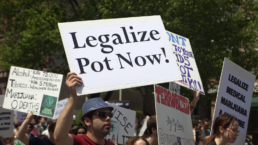
But ten years following the first states’ decisions to legalize, data conclusively shows that these fears were unfounded.
For example, recent data from the Centers for Disease Control and Prevention determined that the percentage of high schoolers who report having used cannabis over the past 30 days actually fell from 23 percent in 2011 to 16 percent in 2021.
Likewise, the percentage of teens who acknowledge having ever tried cannabis has similarly declined. These downward trends coincide with the period when over 20 U.S. states legalized cannabis use by adults.
Those states have experienced similar declines in underage use. According to the findings of a 2020 study published in in the Journal of Adolescent Health, the adoption of state-level legalization laws “predicted a small significant decline in the level of marijuana use among [youth] users.”
Another study published in JAMA Pediatrics similarly concluded: “Marijuana use among youth may actually decline after legalization for recreational purposes,” since “it is more difficult for teenagers to obtain marijuana as drug dealers are replaced by licensed dispensaries that require proof of age.”
In fact, data from California, Colorado, and other legal states confirms that licensed cannabis retailers seldom if ever sell marijuana products to customers who lack proper ID.
Data published last year in the Journal of Safety Research reported that in California, where the adult-use market has been legally regulated since 2016, “there was 100% compliance with the ID policy to keep underage patrons from purchasing marijuana directly from licensed outlets.”
In short, states’ real-world experience with marijuana legalization affirms that these policies can be implemented in a way that provides regulated access for adults while simultaneously limiting youth access and misuse.
That’s one among many of the reasons why public support for adult-use cannabis legalization has risen dramatically over the past decade and remains at record highs.
To date, not a single state that has implemented legalization has reversed course. That’s because these policies are working largely as politicians and voters intended — and because they are preferable to marijuana prohibition.
Ultimately, common sense regulation allowing for the legal, licensed commercial production and sale of cannabis best addresses adult consumers’ demand while keeping marijuana products largely out of the hands of young people.
By contrast, the continued criminalization of cannabis only compounds the public safety risks posed to young people and others by the unregulated marketplace.
Paul Armentano is the Deputy Director of NORML (the National Organization for the Reform of Marijuana Laws) and co-author of the book Marijuana Is Safer: So Why Are We Driving People to Drink? This op-ed was distributed by OtherWords.org.
Recent Posts
“Abolish ICE”: Protests Erupt in NYC After ICE Agents Shoot Father With 5-Year-Old Son in Car
Take Action Now “Candidates should seek support from the AI industry at their own peril.”By Amy Goodman, Darializa Avila Chevalier, and Carmen De…

Voters in Key States See AI Campaign Cash as More Politically Toxic Than AIPAC: Poll
Take Action Now “Candidates should seek support from the AI industry at their own peril.”By Jake Johnson, Common Dreams Polling data released…

Everything You’ve Been Told About Lethal Injection Is a Lie
Take Action Now Death by drugs is brutal—and designed for political optics. Christa Pike’s failed execution pulled back the curtain.By Arianna…

British Support For Israel Is Shattering
Take Action Now There is not a single member of the Foreign and Commonwealth Office who believes that Israel, under any leadership, would allow a…