
Progressive prosecutors should be taking a more aggressive stance against fossil fuel companies, advocates argue.
By Emily Atkin, Heated
The fossil fuel industry should be criminally charged with mass homicide for these deaths, according to a new and novel legal theory. Published by the Harvard Environmental Law Review last year, the argument goes that oil giants knew their products would have lethal consequences, yet actively thwarted efforts to protect people through misinformation and policy delay.
“Prosecutors regularly bring homicide charges against individuals and corporations whose reckless or negligent acts or omissions cause unintentional deaths,” wrote George Washington University law professor Donald Braman and Public Citizen climate director David Arkush.
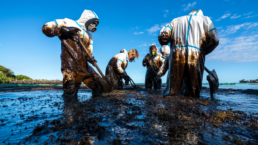
In their paper, Braman and Arkush urged state attorneys general across the country to pursue criminal charges against oil companies in addition to the multitude of civil cases already pending. They said that criminal prosecution—whether it be for homicide or criminal negligence—could be a more powerful and effective tool for spurring change than civil litigation, because a conviction or settlement could result in mandated changes to how fossil fuel companies operate. (They are “not trying to advocate for locking lots of people up,” they said).
Recent Posts

According to Polls, Americans Like Socialism a Lot
Take Action Now A crop of recent polls shows that socialism’s appeal is surprisingly broad. They also reflect a transformed US political landscape…

Massive Ivanka Trump Problem Triggers Existential Threat to GOP: ‘Rage Is Building’
Take Action Now Locals in Albania — where Ivanka and her husband Jared Kushner plan to transform one of the nation’s most important ecological sites…
Vance-Led Task Force Moves to Strip 760,000 People of ACA Coverage
Take Action Now Protect Our Care says about 8 million people have lost coverage since the start of Trump’s second termBy Ruth Milka, Nation of…
The Espionage Act Monster: How Washington Crushes Those Who Expose Its Crimes
Take Action Now As surveillance expands and the ability to communicate anonymously becomes increasingly difficult, the panel asks a fundamental…