From threat modeling to encrypted collaboration apps, we’ve collected experts’ tips and tools for safely and effectively building a group—even while being targeted and tracked by the powerful.
By Andy Greenberg & Lily Hay Newman, Wired
Rarely in modern US history have so many Americans opposed the actions of the federal government with so little hope for a top-down political solution. That’s left millions of people seeking a bottom-up approach to resistance: grassroots organizing.
Yet as Americans assemble their own movements to protect and support immigrants, push back against the Department of Homeland Security’s dangerous incursions into cities, and protest for civil rights and policy changes, they face a federal government that possesses vast surveillance powers and sweeping cooperation from the Silicon Valley companies that hold Americans’ data.
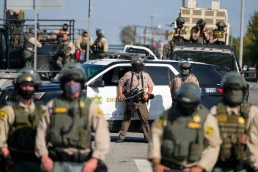
That means political, social, and economic organizing presents a risky dilemma. How do you bring people of all ages, backgrounds, and technical abilities into a mass movement without exposing them to monitoring and targeting by a government—and in particular Immigration and Customs Enforcement and Customs and Border Protection, agencies with paramilitary ambitions, a tendency to break the law, and more funding than some countries’ militaries.
Organizing safely in an age of surveillance increasingly requires not only technical security know-how, but also a tricky balance between secrecy and openness, says Eva Galperin, the director of cybersecurity at the Electronic Frontier Foundation, a nonprofit focused on digital civil liberties. “You may want to limit access to some information to a smaller group of people, and you need to consider the platforms you are using, so that when law enforcement shows up to Google with a subpoena, there’s nothing sensitive it can hand over,” says Galperin. “But you have to weigh that against the fact that the majority of organizing is done in public, with other people, because the power of organizing is in numbers and solidarity.”
There’s no simple set of tech tips that can help organizers safely build a movement while facing that dilemma, but there are approaches, guidelines and tools that can help. WIRED asked technologists, activists, aid groups, and cybersecurity experts for their guidance on how to organize and collaborate in an age of surveillance. Here’s what we found.
Decide What to Protect
The first step to safer and more surveillance-resistant organizing is what digital security experts and organizers call “threat modeling”: Gaming out what potential adversaries might seek to surveil and what needs to be protected. That means creating clear delineations around what information can be public or which conversations can happen on less private platforms, versus which aspects of your organizing must stay secret. You’ll almost certainly need a mix of both approaches.
“If you have no rules on what should or should not be encrypted or secured, then you’re going to want to encrypt every single thing,” says Matt Mitchell, a former founder and security trainer at CryptoHarlem and now CEO of the risk-mitigation firm Safety Sync Group. “It comes from a good place, but that creates a lot of barriers and makes it more likely that someone will make mistakes.”
Recent Posts
Is the War In Iran About to Become Apocalyptic? (w/ Trita Parsi)
Take Action Now As Trump escalates threats, oil chokepoints tighten, and talk of “total surrender” creeps toward the unthinkable, Trita Parsi warns…

White House Budget Details FBI Office Dedicated to Spying on Those Who Oppose Trump’s ‘Extremist Agenda’
Take Action Now “If your political views are practically anything other than MAGA, you’re on notice, courtesy of the FBI,” said journalist Ken…
While Distancing From AIPAC, Most 2028 Democratic Hopefuls Are Still Embracing Israel
Take Action Now In sharp contrast to confronting the immorality of arming Israel’s genocidal policies, simply promising not to take AIPAC money is…
The Next Coup Attempt … And How to Stop It
Take Action Now It is up to us to put two and two together: Trump will seek to exploit the war (or the next one) to alter the elections. We bear…